Every Rebate Has an Expiry Date: 25 Years of Solar and Battery Rebates
On 7 November 2026 the ABC reported that Treasury is drafting options to cut the federal battery rebate, and the rebate already steps down on 1 January 2027. If that sounds familiar, it should. Australia has been launching, trimming and closing solar and battery incentives for more than 25 years.
This is that solar rebate history in one place: every major scheme from the first rooftop solar rebate in 2000 to this month’s budget review, what happened to it, and how much notice people got. At the end, we look at what the pattern means if a battery is on your list.
The Short Answer: Do Solar and Battery Rebates Get Cut Early?
Often, yes. Most of the schemes below were cut, capped or closed sooner than people expected, usually because uptake ran far ahead of the budget. It has happened under Labor and Coalition governments, at state and federal level, sometimes with no notice at all.
There is a second half to the pattern: people who got in before a cut generally kept their deal. Today’s federal battery rebate is confirmed to drop on 1 January 2027 and is now under budget review, so the rebate on offer today is the most it is ever going to be.
The Timeline: Australia’s Solar Rebate History, 2000 to 2026
Era 12000 to 2013
The Big Upfront Rebates
The first rooftop solar rebate
The federal Photovoltaic Rebate Program opened in 2000 with a cash rebate of up to $4,000 towards rooftop solar. It was later renamed the Solar Homes and Communities Plan, and by 2008 the rebate had doubled to up to $8,000 a home.
Sources: SolarQuotes, Senate committee report
A means test, effective overnight
The May 2008 Budget limited the $8,000 rebate to households with a taxable income under $100,000, effective immediately. It was announced on Budget night and applied straight away, so higher-earning households were cut out overnight. A Senate committee later examined what it did to the solar industry.
Sources: Senate committee report
The $8,000 rebate closes three weeks early
As panels got cheaper, demand took off: applications rose from about 420 a week in May 2008 to around 6,043 a week by May 2009. The rebate was due to run until 30 June 2009, but applications closed on 9 June, the same day the end was announced. Its replacement, Solar Credits, started that day.
Sources: SolarQuotes, Solar Choice
Solar Credits, cut and cut again
Solar Credits gave new solar systems five times the usual number of certificates. In December 2010 the phase-down was brought forward by a year, then cut harder again: the multiplier fell to 3 in July 2011 and 2 in July 2012. On 16 November 2012 the government announced it would end on 1 January 2013, six months ahead of schedule.
Sources: Minister’s release, Dec 2010, Minister’s release, Nov 2012
Era 22010 to 2012
The Feed-In Tariff Gold Rush
NSW Solar Bonus Scheme
From 1 January 2010, NSW paid 60c for every kWh a solar system generated, locked in until the end of 2016. By October 2010 the forecast cost had blown out from $362 million to almost $4 billion, so the rate for new customers was cut to 20c.
On 29 April 2011 the government announced a hold on new applications, backdated to midnight the night before, and in May it closed the scheme for good. It also proposed cutting existing customers from 60c to 40c, a move it later backed away from.
Sources: NSW Audit Office, IPART, pv magazine
ACT feed-in tariff
The ACT paid household solar a premium 45.7c per kWh until its 15 MW cap filled, closing the household category on 31 May 2011. It was reopened to households at 30.16c under the medium-scale cap, and that filled within two days, closing on 13 July 2011.
Sources: Solar Choice, RiotACT
WA feed-in tariff
Western Australia paid a 40c per kWh subsidy for exported solar. In May 2011 it halved the rate to 20c for anyone applying from 1 July. Then, at 8am on 1 August 2011, it suspended the scheme after reaching its quota, announced the same day.
Sources: Horizon Power terms, Horizon Power
Victoria and South Australia premium tariffs
Victoria’s 60c Premium Feed-in Tariff and South Australia’s 44c tariff both closed to new applicants at the end of September 2011. Victoria replaced it with a 25c transitional rate, and SA with 16c for two years. Victorians already on 60c kept it until November 2024.
Sources: Solar Choice, SA Government, SolarQuotes
Queensland’s 44c Solar Bonus Scheme
Queensland’s 44c feed-in tariff had run since July 2008. On 25 June 2012 the government announced it would close to new customers at midnight on 9 July, with an 8c rate after that. Energex received 14,544 applications in the nine days after the announcement as households raced the deadline.
Sources: Queensland regulation notes, Solar Choice
The twist: the people who got in before each cut kept their deal. Queensland’s 44c tariff is legislated to run until 1 July 2028, and South Australia’s until 30 June 2028.
Era 32014
The Near Miss
The rooftop solar rebate under review
A review of the Renewable Energy Target recommended either closing the small-scale scheme behind the rooftop solar rebate immediately, or bringing its end forward a decade, from 2030 to 2020. The rooftop rebate was left in place. The large-scale target was cut instead in 2015, from 41,000 GWh to 33,000 GWh.
Sources: Engineers Australia, Government News, Allens
Era 42018 to 2025
The Battery Rebates
SA Home Battery Scheme
South Australia’s Home Battery Scheme launched in late 2018 with up to $6,000 off a home battery and a goal of 40,000 homes. The subsidy was reduced over time, and in the June 2022 state budget the new government scrapped the scheme and redirected the remaining $19 million.
Sources: One Step Off The Grid, SolarQuotes
Victoria’s battery rebate, then loans
Solar Victoria’s battery rebate launched in 2019 at $4,838. It was cut to $2,950 by July 2022, then replaced in mid-2023 with government battery loans of up to $8,800. Applications for those loans closed in May 2025, a month before the federal rebate began.
Sources: SolarQuotes, pv magazine
NSW Empowering Homes
Ahead of the 2019 state election, NSW promised government loans of up to $14,000 for solar and batteries to up to 300,000 households. It launched as a pilot in the Hunter in 2020 and grew to 24 council areas, but never went statewide. Two years in, 439 households had installed a system.
Sources: SolarQuotes, RenewEconomy
Queensland Battery Booster
Queensland’s Battery Booster opened in February 2024 with $3,000 off a home battery, or $4,000 for lower-income households. Demand was strong enough that funding was lifted from $10 million to $16 million in April. It still ran out, and the program closed to new applications on 8 May 2024, under three months after it opened.
Sources: Queensland Government, Queensland Government
NSW battery installation discount
NSW began offering a battery installation discount through its Peak Demand Reduction Scheme in November 2024, and it quickly drove about 86% of the scheme’s activity. On 10 June 2025 it was announced that the discount would be suspended from 1 July 2025, when the federal rebate began, because the two could not be combined. A larger incentive for joining a virtual power plant was offered instead.
WA Residential Battery Scheme
WA announced a battery rebate in early 2025 worth up to $5,000 for Synergy customers and $7,500 for regional Horizon Power customers. On 3 June 2025, weeks before it opened, those were cut to $1,300 and $3,800, with the scheme spread across up to 100,000 homes instead of about 20,000.
Sources: SolarQuotes
Wondering what today’s rebate is worth on your battery? We work it out on your actual battery size and install date, so you know the number before you decide. See how the battery rebate works
Era 52025 to today
The Federal Battery Rebate
Cheaper Home Batteries Program
The federal Cheaper Home Batteries Program started on 1 July 2025, taking around 30% off the upfront cost of an eligible battery through certificates under the Small-scale Renewable Energy Scheme. It was budgeted at $2.3 billion. Uptake beat every forecast: around 600,000 home batteries have been installed since it began, according to the ABC.
Sources: Energy-Storage.news, ABC News
The budget blowout
By late 2025 the program was on track for a bill of around $14 billion, against its original $2.3 billion. On 13 December 2025 the government lifted funding to about $7.2 billion, but cut support for larger batteries and moved the step-downs from once a year to every six months, starting 1 May 2026.
Sources: RenewEconomy, SolarQuotes
The first cuts take effect
From 1 May 2026, the full rate applies only to the first 14 kWh of usable capacity, 60% of it from 14 to 28 kWh, and 15% from 28 to 50 kWh. The rate per kWh is scheduled to fall again on 1 January 2027 and every six months after that.
Sources: Energy Matters
A pledge to scrap it
The Coalition announced it would scrap the home battery program if it wins the next federal election, as part of a $31 billion savings package. That election is due by 20 May 2028 at the latest. The announcement did not say what would happen to applications in progress.
Sources: Liberal Party, Parliamentary Library
Treasury looks for cuts
With every minister asked to find savings before the mid-year budget update, the ABC reported that Treasury is drafting options to cut back the battery program, including a lower upfront subsidy. The Prime Minister has not ruled out means-testing it, while the Environment Minister called the program “phenomenally successful”. Nothing has been decided.
Sources: ABC News
Spot the Pattern: Launch, Rush, Review, Cut
Line the schemes up and the same four steps keep repeating. A generous rebate opens. Prices fall and Australians pile in faster than forecast. The budget blows out and governments look for savings. Then the rules change, often with days or weeks of notice.
- LaunchA generous rebate opens.
- RushAustralians pile in faster than forecast.
- ReviewThe budget blows out and governments look for savings.Today’s battery rebate is here
- CutThe rules change, often with days or weeks of notice.
How much notice people got
The people who came out ahead were not the ones who waited to see what happened. They were the ones who acted while the scheme was open. State and federal, Labor and Coalition: this is not about who is in charge. It is how rebates tend to work.
Where Today’s Battery Rebate Sits
The federal battery rebate is set by a factor per kWh of usable battery capacity, and the Clean Energy Regulator’s schedule already cuts that factor every six months. Here is what the scheduled step-downs alone do to a single Hinen B14400 (13.68 kWh usable), before any new cut from the budget review.
| Installed | Factor per kWh | Hinen B14400, up to about |
|---|---|---|
| Now to 31 Dec 2026 | 6.8 | $3,700 |
| Jan to Jun 2027 | 5.7 | $3,100 |
| Jul to Dec 2027 | 5.2 | $2,850 |
| Jan to Jun 2028 | 4.6 | $2,500 |
Two things follow from the history. First, the rebate is set by your install date, not the date you sign a quote, so a quote alone does not lock in this year’s rate. Second, December books out early, so if a battery is on your list, aim to book an install before Christmas. We cover the review itself in what the battery rebate review means, and the scheduled drop in what the 1 January step-down costs you.
What the Pattern Means If a Battery Is on Your List
The rebate is only the discount. The reason to own a home battery is what it does every day: it charges in the middle of the day, from your own panels or from cheap midday power such as the Solar Sharer Offer’s three free hours in NSW, South East Queensland and SA, and stores that energy for the evening, when you use the most and grid power costs the most.
- Size it right the first time. Each premises gets one battery rebate claim, and capacity added later to a battery that already claimed is not eligible. An undersized battery now can mean paying full price to grow it.
- Check the battery can join a virtual power plant. Grid-connected batteries must be VPP capable to get the rebate, even if you choose not to sign up.
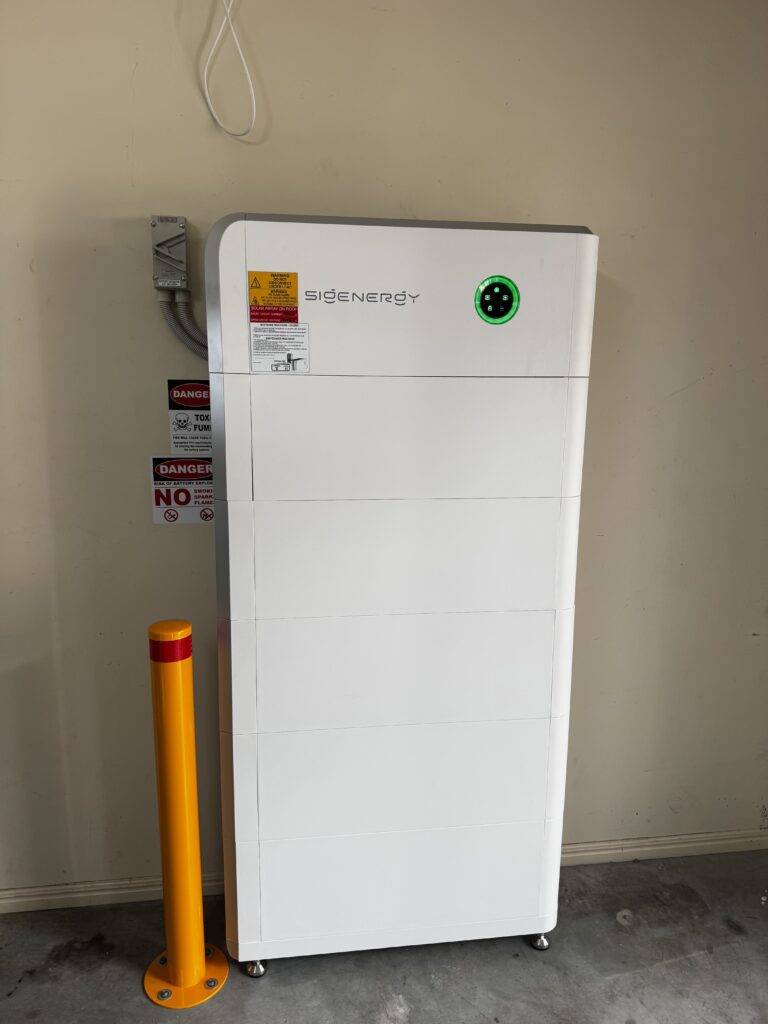
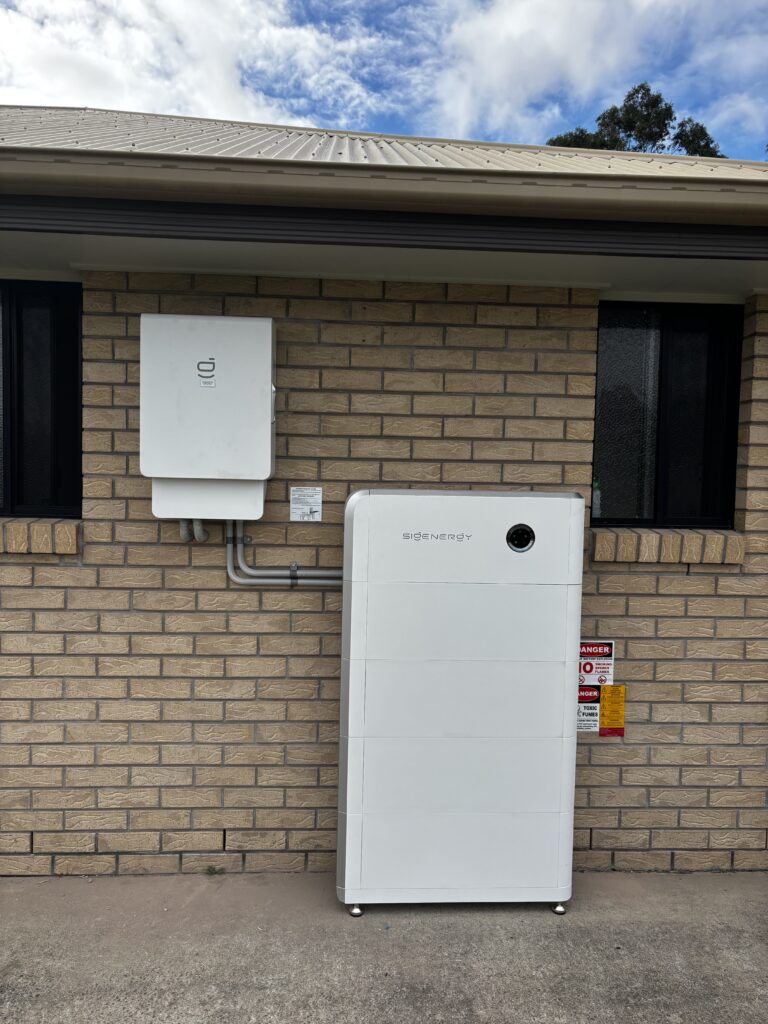
- Pick a system that suits your home. The Sigenergy SigenStor is modular with a 10 year warranty, and the Hinen B14400 gives 13.68 kWh in one unit with a 12 year warranty.
Clean Power Australia has installed more than 5,000 batteries across NSW, QLD, ACT and SA. As a NETCC Approved Seller, we handle the rebate certificates for you, and your quote shows the rebate at today’s rate with a real install date.
Common Questions
Has the federal battery rebate been cut?
Not as at 11 November 2026. The scheduled drop on 1 January 2027 is confirmed, and Treasury is reported to be drafting options for further cuts ahead of the mid-year budget update. Nothing beyond the scheduled drop has been decided.
Did people lose their rebate when past schemes were cut?
Generally not. In most of the schemes above, people already signed up kept their deal, which is why some homes are still paid 44c today. NSW did propose cutting existing customers from 60c to 40c in 2011, but backed away. The Coalition’s pledge does not address batteries already installed.
Should I wait to see what the review decides?
Waiting cannot get you a bigger rebate. The factor falls on 1 January 2027 regardless of the review, and any new cut would come on top of that. Meanwhile, every month without a battery is another month of buying evening power at full price.
Why do solar and battery rebates keep getting cut?
Mostly because they work better than forecast. As prices fall, more households sign up than budgeted for, costs blow out, and governments rebalance. The pattern is consistent across states, parties and decades.
If a battery is already on your list, the simplest way to know your number is to ask. We will size the battery to your evening usage, show the rebate at today’s rate and give you a real install date.
Sources
- Parliament of Australia, Senate inquiry into the solar rebate means test, 2008
- Solar Choice, government calls early finish to $8,000 rebate, June 2009
- Minister for Climate Change, Solar Credits phase-out release, 16 November 2012
- NSW Audit Office, Solar Bonus Scheme report
- IPART, solar feed-in tariff release, March 2012
- Horizon Power, suspension of the WA net feed-in tariff, August 2011
- Queensland Government, Electricity Amendment Regulation explanatory notes, 2012
- Engineers Australia, RET review findings, August 2014
- One Step Off The Grid, SA Home Battery Scheme dumped, 2022
- SolarQuotes, NSW solar battery loans go begging, March 2022
- Queensland Government, Battery Booster funding boost, April 2024
- NSW DCCEEW, PDRS rule change position paper, June 2025
- SolarQuotes, WA residential battery rebate changes, June 2025
- RenewEconomy, Cheaper Home Batteries faced a $14 billion bill, December 2025
- Energy Matters, Cheaper Home Batteries changes from 1 May 2026
- Parliamentary Library, when is the next federal election, August 2025
- ABC News, home battery subsidy and the search for savings, 7 November 2026