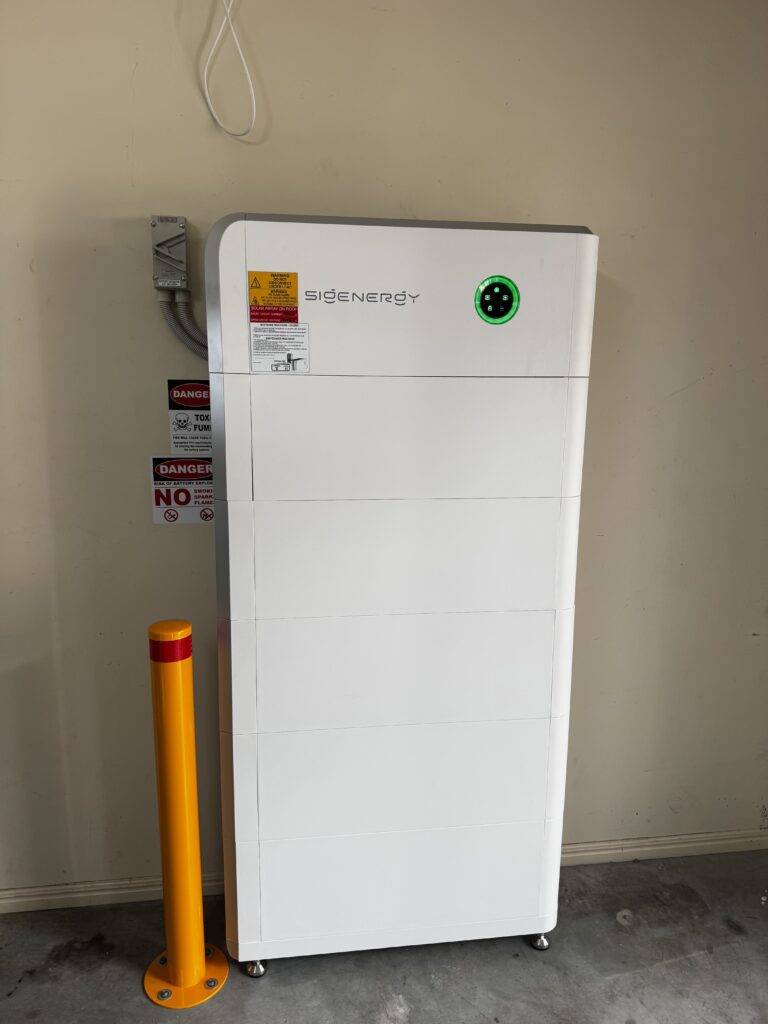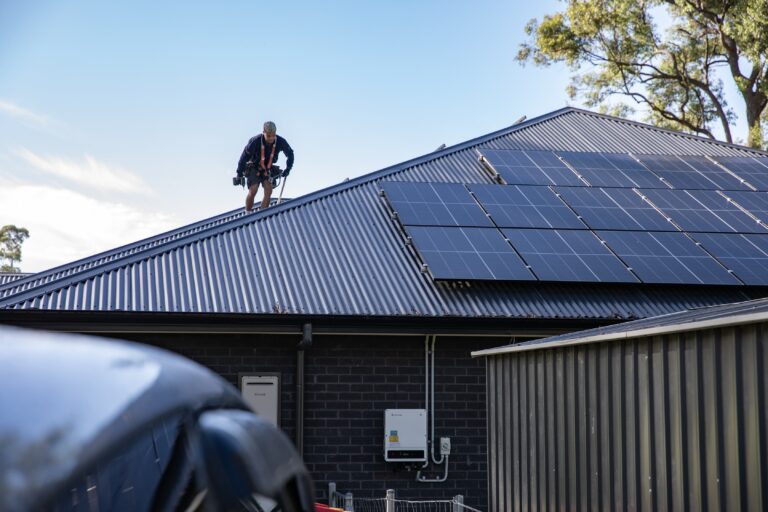
Charge Your EV From Your Battery: The Sigenergy EV Charger

Summer road trip season is weeks away, and for a growing number of households the car now fills up in the garage, not at the servo. The question we hear most from EV owners is simple: can my home battery charge my car? With a Sigenergy EV charger, the answer is yes, and the way it does it is a little different to a normal wall charger.
This guide explains how the Sigenergy DC charger works, why the battery is what makes home EV charging cheaper, how it compares with Sigenergy’s AC charger, and what to check before you buy.
The Short Answer: Can a Home Battery Charge Your EV?
Yes. A home battery lets you charge up at midday, from your own solar or from free or cheap grid power such as the Solar Sharer Offer window, and store that power for the evening, when you need it and rates are highest. That is the whole reason to own one, and an EV simply gives your battery one more job to do.
Under the Solar Sharer Offer, households in NSW, South East Queensland and South Australia with a smart meter can get the first 24 kWh used in a three hour midday window free, on retailers that offer it. The window is 11am to 2pm in NSW and South East Queensland, and 12pm to 3pm in South Australia. A battery soaks up that free or solar power and holds it for the evening peak, so the car, the air conditioner and the cooking are not running on the most expensive electricity of the day.
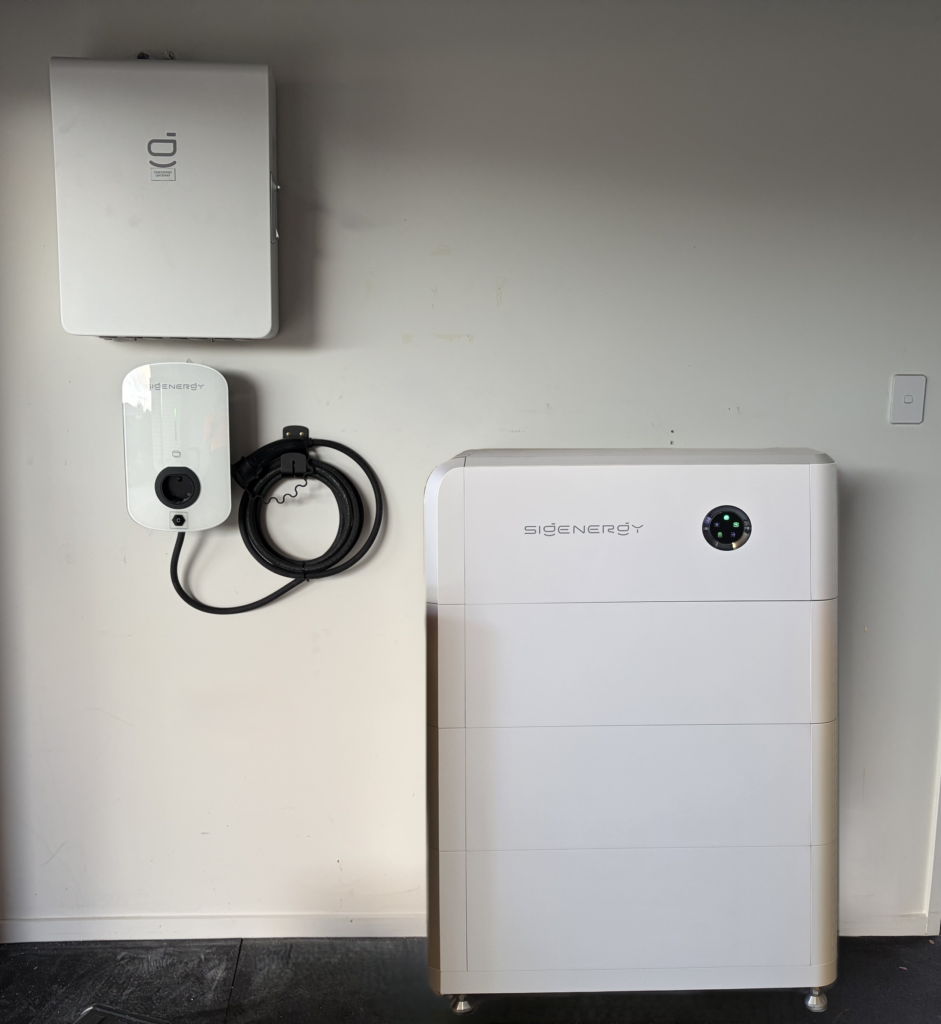
Sigenergy goes one step further. Its SigenStor EV DC charging module clips into the battery stack and sends power from your panels and battery straight into the car, at up to 25 kW. You can read more about how we set this up on our home EV charger installation page.
How the Sigenergy DC Charger Works
Most home EV chargers are AC chargers: they take mains power and the car converts it to DC to fill its battery. Sigenergy’s DC module works differently because it sits inside the SigenStor system itself.
- DC coupled. Sigenergy describes the module as DC coupled, with direct access to DC power from your solar panels and batteries, so it can charge the car directly with solar-generated electricity.
- Fast. It comes in 12.5 kW or 25 kW versions, so a long drive’s worth of charge does not have to take all night.
- Standard plug. It uses a CCS2 connector, the same DC fast-charging plug you use at public fast chargers, so check your car has a CCS2 port.
- Smart modes. PV Surplus Charging uses only the solar you are not using elsewhere, Fast Charging draws on solar, battery and grid together, and Battery Boost lets the home battery help, with a cut-off so it keeps a reserve for the house.
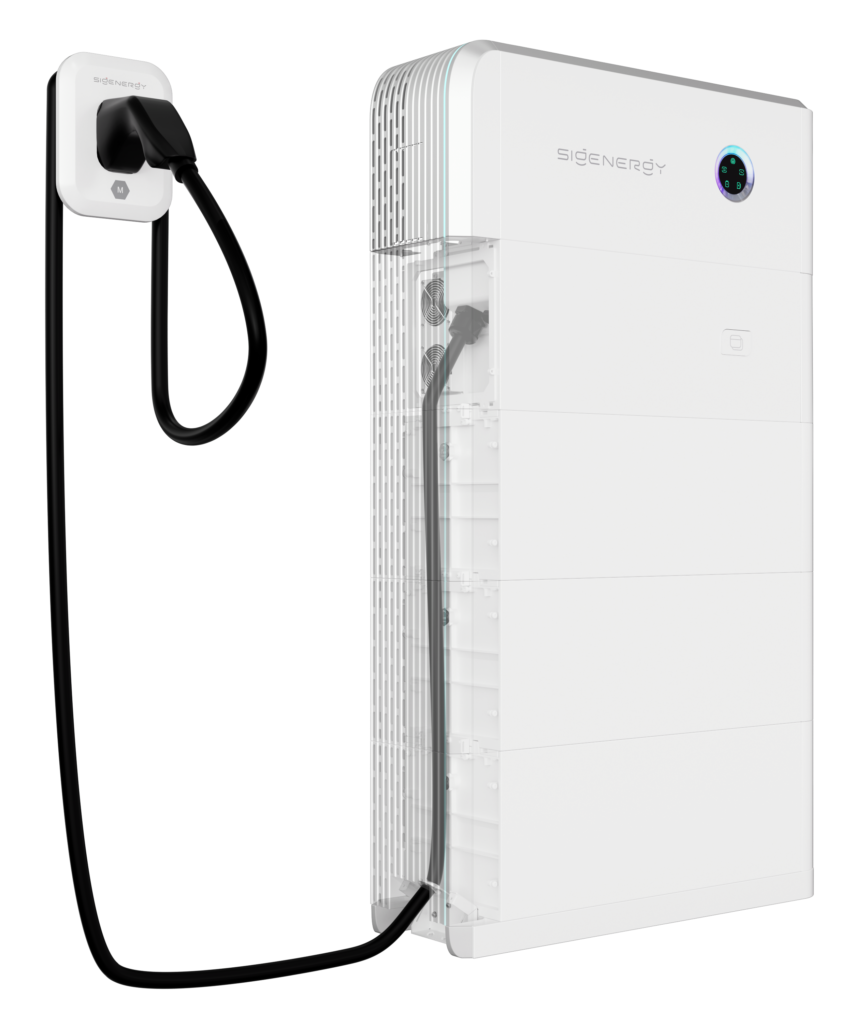
Because the charger lives in the same stack as the battery and the Energy Controller, everything is managed as one system. The mySigen app shows you where every kilowatt-hour is flowing, so you can see when the car is running on sunshine.
Sigenergy EV Charger Options: AC or DC?
Sigenergy makes two home chargers. Both are designed to put your own solar first. The right one depends on how far you drive, how quickly you need to charge and how your home is wired.
| Sigen EV AC Charger | SigenStor EV DC module | |
|---|---|---|
| Where it goes | Wall mounted, anywhere near the car | Built into the SigenStor battery stack |
| Charging power | Up to 22 kW (three-phase) | 12.5 kW or 25 kW |
| Plug type | Type 2 | CCS2 |
| Solar modes | Green power first, PV surplus, Battery Boost, scheduled | PV surplus, Fast Charging, Battery Boost |
| Best for | Overnight or daytime top-ups, flexible placement | Fast turnaround and charging straight from solar and battery |
The Sigen EV AC Charger can switch between single-phase and three-phase charging when paired with the Sigen Power Sensor, and reaches 22 kW only on a three-phase supply. Either way, the charger talks to the battery, so you are not accidentally draining the house reserve to fill the car.
Not sure whether AC or DC suits your driving? We will look at your switchboard, your roof and your daily kilometres, then design the whole system around them. See how we install Sigenergy
What a Summer Day Looks Like With Solar, a Battery and an EV
Here is how a typical sunny day plays out in a home with rooftop solar, a SigenStor battery and a Sigenergy EV charger. Your exact pattern depends on your system size, usage and retail plan, so treat this as an illustration rather than a forecast.
- Morning: the panels start producing and cover the house first. Any surplus begins filling the battery.
- Midday: solar peaks. With PV Surplus Charging on, the car takes the extra solar instead of exporting it for a small feed-in credit. On a Solar Sharer plan, the battery and car can also draw up to 24 kWh of free grid power in the window.
- Afternoon: the battery finishes charging while the sun is still up.
- Evening peak: the battery runs the house through dinner, air conditioning and TV, when time-of-use rates are usually at their highest.
- Late night: if the car still needs a top-up, Battery Boost can help, keeping a reserve you set for the house.
If you are weighing up retail plans, our guide to choosing an EV charging plan compares free midday hours with cheap overnight rates.
Can Your Car Power Your Home?
The SigenStor DC module is built for two-way, or bidirectional, charging. Sigenergy says vehicle-to-home (V2H) and vehicle-to-grid (V2G) capability is now available, with two important limits: the car itself has to support it, and it depends on the rules in each region.
In Australia, bidirectional charging is still being approved network by network. Essential Energy approved the SigenStor bidirectional DC charger, paired with a specific EV, for use on its network in April 2025. So treat V2H as a feature the hardware is ready for, not a reason to buy today. Your battery is the part doing the heavy lifting now.
Why Installers Rate Sigenergy
Sigenergy has had a big 2026. Australian installers voted it best home battery (26% of 125 installers) and best EV charger (24% of installer votes) in the SolarQuotes 2026 Installer’s Choice Awards. In November, BloombergNEF named Sigenergy a Tier 1 energy storage manufacturer, which we covered in our Sigenergy Tier 1 article.
Add a 10 year warranty on the SigenStor battery, a modular stack you can grow later, and an EV charger that plugs into the same system, and it is easy to see why installers keep choosing it.
The battery part of a SigenStor system can also attract the federal Cheaper Home Batteries rebate. The Clean Energy Regulator applies a factor of 6.8 STCs per usable kWh until 31 December 2026, falling to 5.7 from 1 January 2027 and stepping down every six months after that. Getting your battery in before the new year locks in the higher rate, subject to eligibility.
Getting a Sigenergy EV Charger Installed
A good EV setup starts with the battery and the switchboard, not the charger. Clean Power Australia has installed more than 5,000 batteries across NSW, QLD, ACT and SA, and our local SAA accredited installers check your supply, phase and meter box before recommending AC or DC. If you already have a SigenStor, ask us whether adding the DC module suits your system.
We can also add backup with the Sigen Energy Gateway if you want the house to keep running in a blackout. Backup depends on the gateway and your system design, and we will explain exactly which circuits are covered. Learn more on our EV chargers page.
Common Questions
Does the Sigenergy EV charger get the battery rebate?
The Cheaper Home Batteries Program is calculated on a battery’s usable capacity, so the rebate applies to the SigenStor battery modules, not the charger. The charger is part of the same system, so it can be installed at the same time.
Will the DC charger work with my car?
It uses a CCS2 connector for DC charging. Check your car’s charge port or manual, and we will confirm compatibility before you buy.
Do I need three-phase power?
Not for every option. The Sigen EV AC Charger reaches its full 22 kW only on three-phase power, and the right setup depends on your supply. We check your switchboard during the consultation.
Do I need a battery to use the Solar Sharer Offer?
No. Any eligible household with a smart meter on a participating plan can use the free window. A battery lets you keep that free or solar power for the evening, instead of only using it while the sun is up.
If you are planning to charge an EV at home this summer, the best time to design the battery and charger together is before you buy either one.
Sources
- Sigenergy, SigenStor EV DC charging module (AU product page)
- Sigenergy, Sigen EV AC Charger (AU product page)
- Australian Energy Regulator, Solar Sharer Offer fact sheet, May 2026
- energy.gov.au, Solar Sharer Offer
- Clean Energy Regulator, Solar batteries and STCs (updated 29 October 2026)
- Essential Energy, vehicle-to-grid approval media release, April 2025
- Sigenergy via GlobeNewswire, BloombergNEF Tier 1 Q4 2026, November 2026