
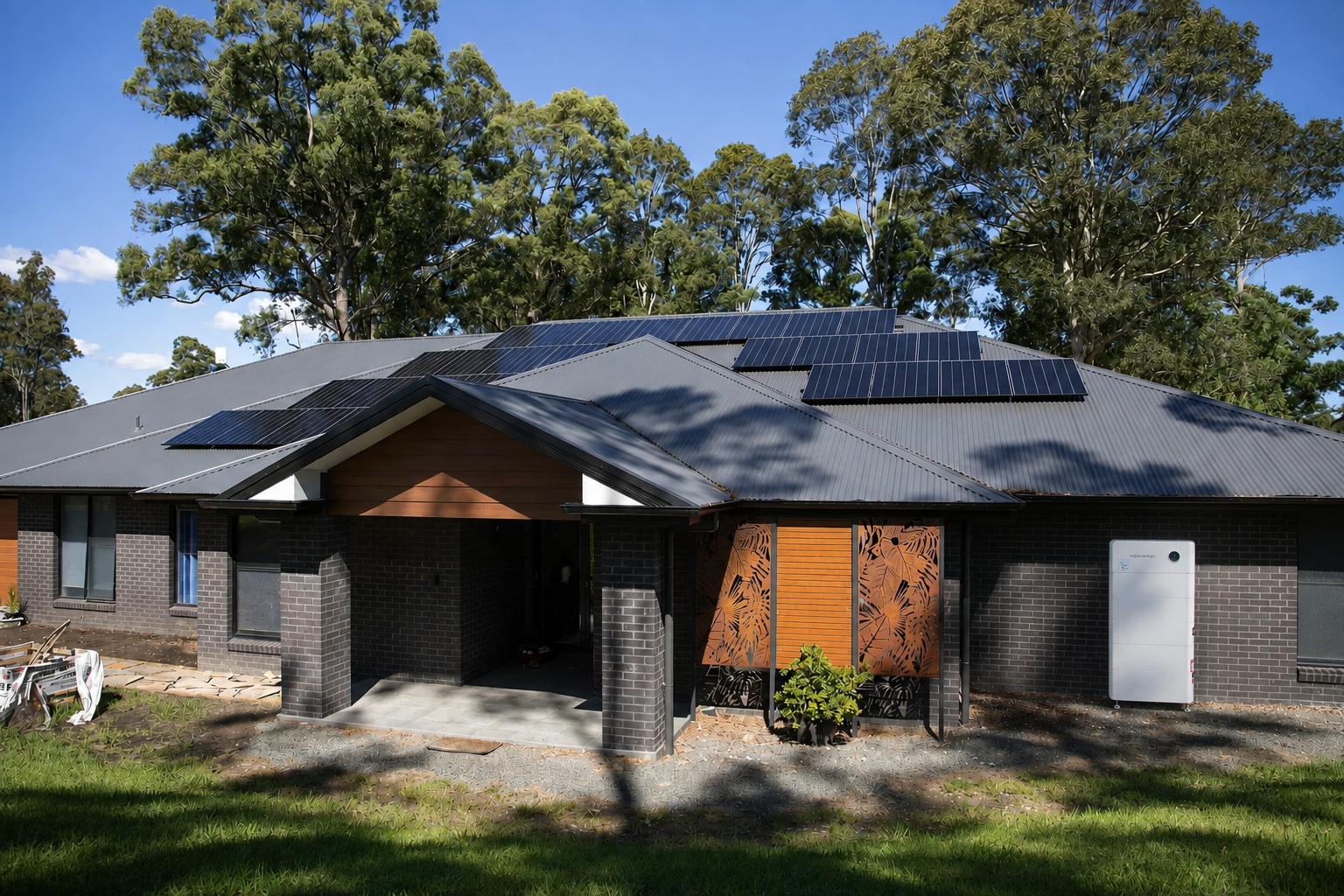
Run your house at night on the power your roof made today.
A battery stores what your panels generate during the day so you can use it after sunset, when electricity is most expensive. Add the Powow VPP and it can earn you credits as well.
The batteries we install
Two brands do the vast majority of our work. We only install storage with a genuine Australian presence, so warranty claims are handled here rather than offshore.
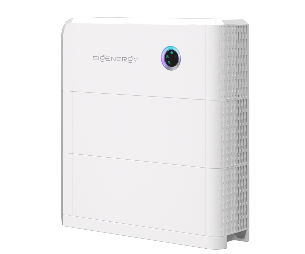
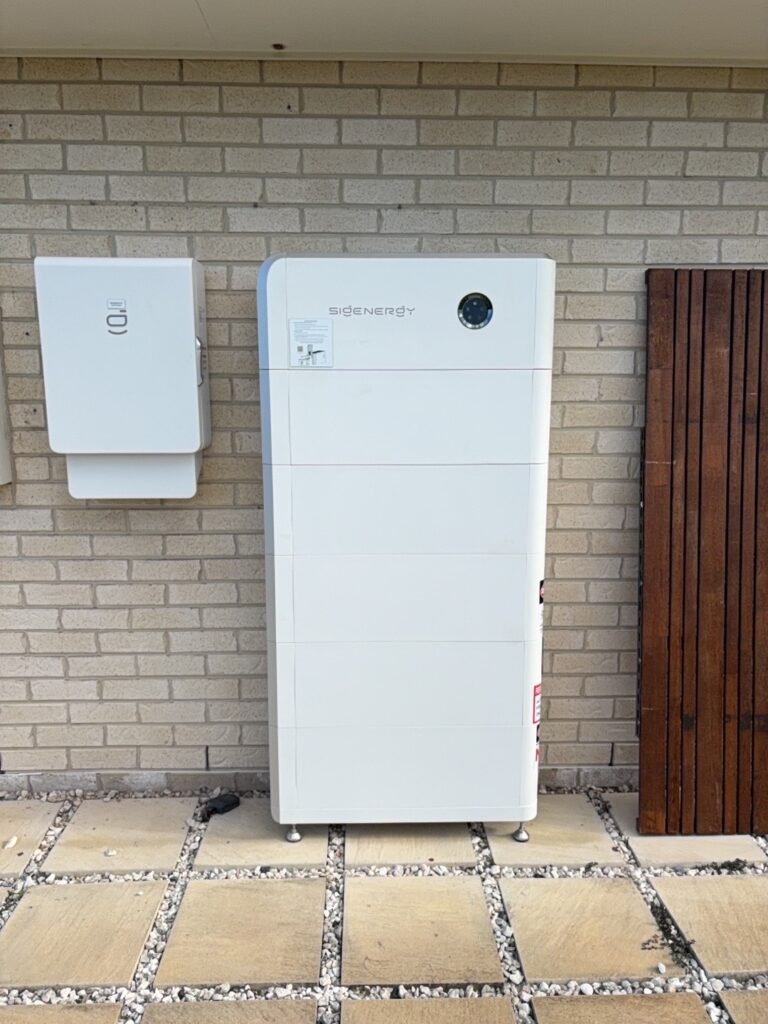
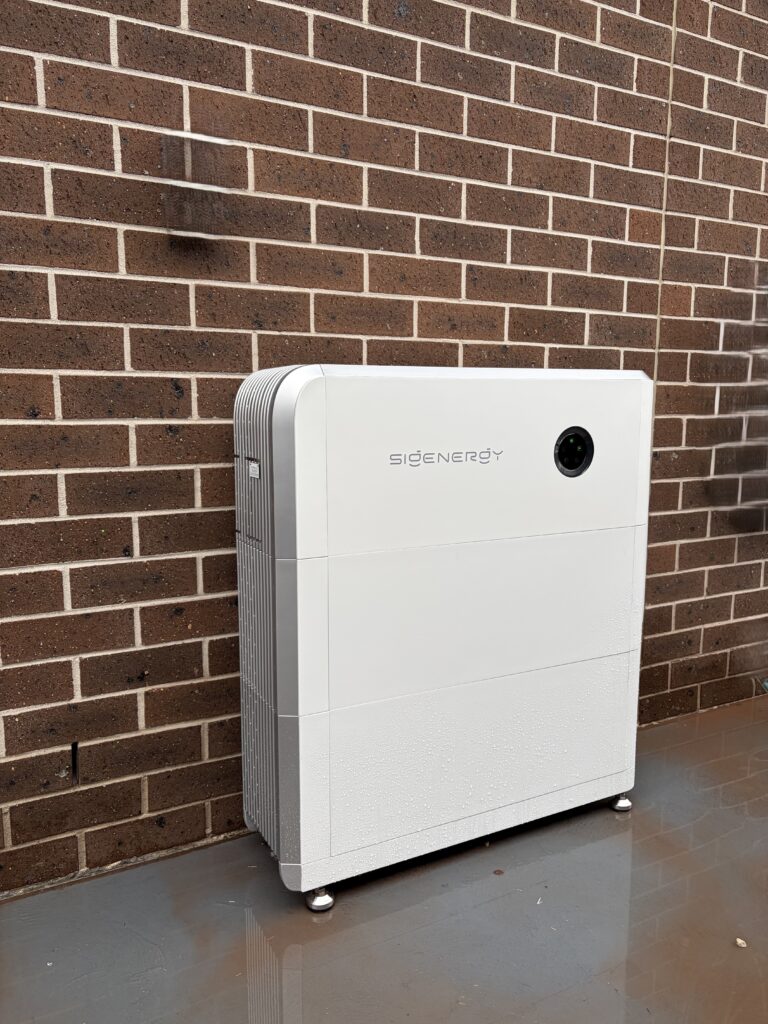
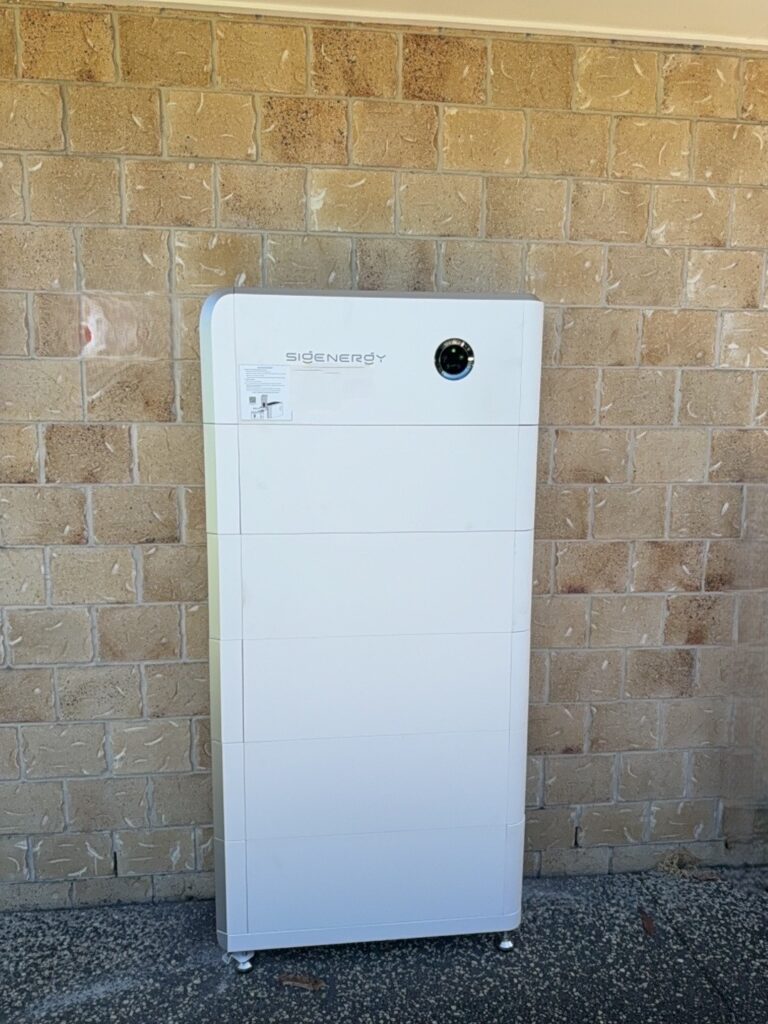
Sigenergy SigenStor
Our flagship. Modular all-in-one system with an integrated inverter, whole-home backup available, and capacity you can stack as your usage grows.
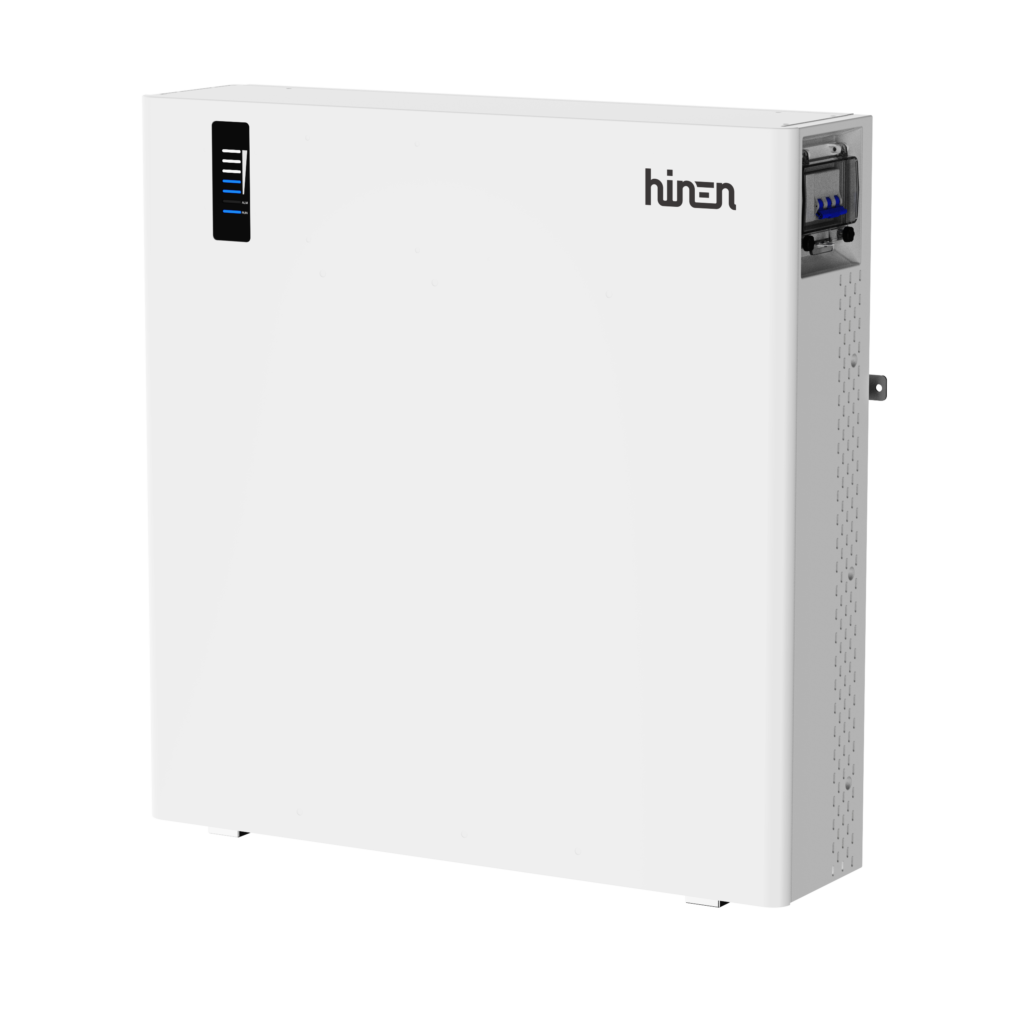
Hinen
Compact, cost-effective storage that does the core job well. The standout is the warranty: twelve years as standard, longer than a lot of far more expensive units.
Why customers add a battery
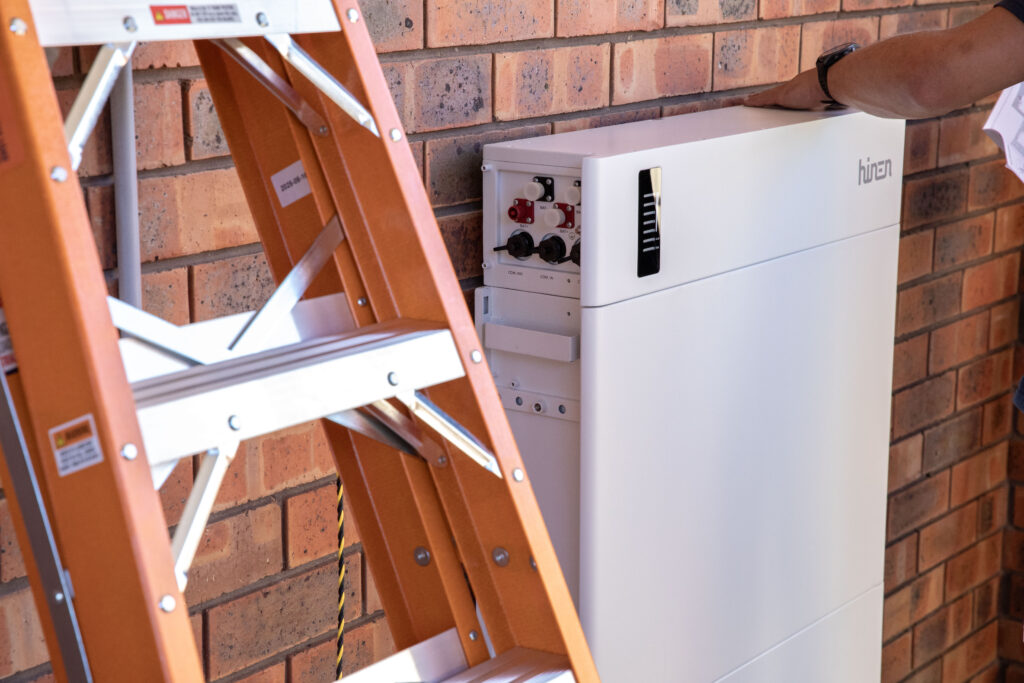
Cut the evening peak
Most households use the bulk of their power after 5pm. A battery covers that window with solar you already generated.
Blackout protection
Whole-home backup is available on the systems we install, so the house keeps running when the grid drops out rather than a handful of nominated circuits. It needs a backup gateway, which we quote as part of the design.
Earn from a VPP
Every battery we install is VPP compatible. That pays you for spare capacity, and the income can go towards the daily supply charge, the one part of a bill solar cannot touch.
Up to 12 years of warranty
Hinen carries twelve years as standard, two beyond the industry norm and longer than a lot of far more expensive units. Sigenergy carries ten. Both are held with manufacturers that have a genuine Australian presence, so a claim is a phone call rather than a shipping container.
A 100% Australian based support team
The people who look after your system afterwards are here, not offshore. They can see your install record, diagnose most faults remotely, and lodge warranty claims with the manufacturer on your behalf.
How it works
-
We profile your evening
Not your bill total. A battery is sized to the evening it has to cover.
-
We size it and apply the rebate
Capacity matched to that load, with the federal rebate off the quote.
-
We plan the gateway
Full home backup needs switchboard work, sorted before install day.
-
We install and test the backup
Including a simulated outage, so you know it actually works.
A full solar and battery install in 60 seconds.
Solar alone leaves money on the table
Most households generate their surplus at midday and use most of their power after five. That mismatch is the whole problem.
Without storage, the power your roof makes during the day gets exported for a feed-in credit worth a few cents, and then you buy it back in the evening at four or five times the price. You are effectively selling wholesale and buying retail, every single day.
Feed-in tariffs have fallen a long way and are not coming back. The economics have shifted from exporting your surplus to using it yourself, which is a different question and needs a different answer.
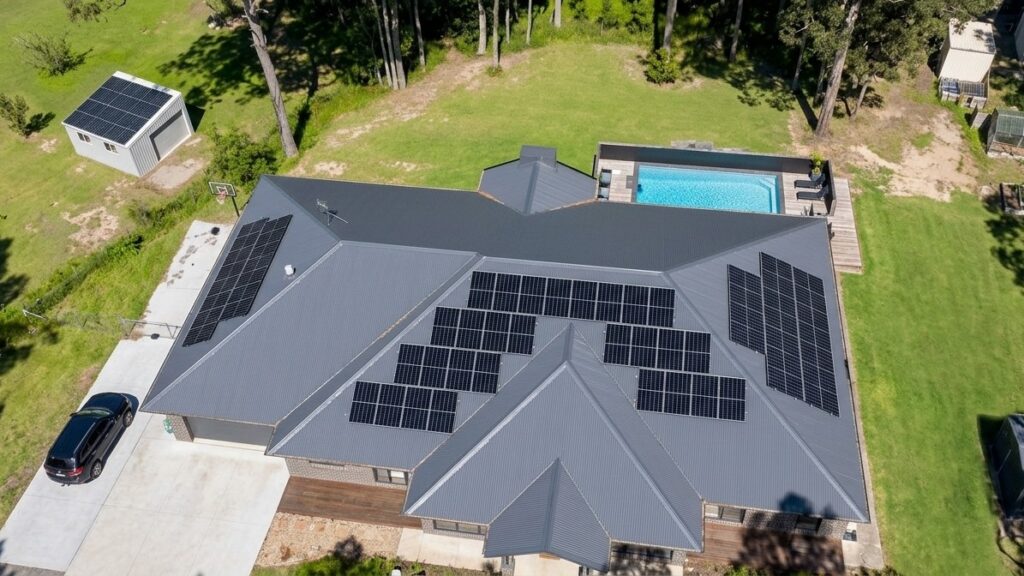
A battery closes that gap. It holds the surplus until you need it, which is the difference between generating a lot of power and actually paying less for power.
Six reasons to add a battery now rather than later
The rebate is the obvious one, but it is not the only one.
-
The federal rebate steps down on a legislated schedule
The Cheaper Home Batteries discount reduces every six months through to the end of 2030, and the rate is set by your installation date, not your order date.
-
The rebate is strongest on the first 14 kWh
Since 1 May 2026 it tapers by battery size. For a typical household battery, that means you are in the band that still attracts the full rate. How the federal battery rebate works.
-
Feed-in tariffs keep falling
Every cut to what your retailer pays for exports makes storing your own surplus more valuable than selling it.
-
Evening rates are where the bill is
The 4pm to 9pm window is the most expensive power most households buy. A battery covers exactly that window.
-
You can be paid for spare capacity
A battery sized for your worst evening sits partly unused most days. A virtual power plant pays you for that idle capacity, and that income can go towards your daily supply charge.
-
Blackouts are becoming more common, not less
Full home backup means the house keeps running rather than a handful of nominated circuits.
Blackout protection is not the same as having a battery
This is the detail that catches people out. A battery stores power, but it will not automatically keep your house running when the grid drops out. That needs a backup gateway, wired into your switchboard, which disconnects you from the network in milliseconds and lets the battery run the house on its own.
Without one, a system shuts down in a blackout for safety, even with a full battery on the wall. It is a legal requirement, not a fault, and plenty of people only discover it during their first outage.
The systems we recommend include full home backup rather than a handful of nominated circuits, so the fridge, the lights, the internet and the power points all stay live. One of our customers put it better than we could: their suburb had a brief outage and the changeover was fast enough that a PlayStation mid-game did not even reboot.
- Full home backup, not selected circuits
- Changeover fast enough that most electronics never notice
- Ask any installer whether their quote includes a gateway
Want this sized for your evenings?
We look at the evening you actually have, not an average household, then apply the rebate.
Solar with a battery, and without
Indicative only. Assumes an existing rooftop solar system, a typical household evening load, and current retail and feed-in rates. Your figures will differ with your usage, your battery size and your tariff.
Three hours of free power a day, and how a battery makes it count
The Solar Sharer Offer is a regulated electricity plan available since July 2026. Retailers in New South Wales, South East Queensland and South Australia must make available at least one plan that includes three hours of free electricity every day. It runs 11am to 2pm in NSW and South East Queensland, and midday to 3pm in South Australia, capped at 24 kWh. You need a smart meter and you need to opt in. It does not apply in the ACT or Tasmania.
The problem is obvious the moment you think about your own day. Three free hours in the middle of a weekday are worth whatever you can actually consume in them, and most households are at work or school.
A battery changes the arithmetic. Instead of consuming what you can during the window, you store it, then run the house through the evening peak when power costs the most and your household is actually home using it.
- Charge for nothing at midday, whatever the weather did
- Run the evening peak on it, which is the most expensive power you buy
- Earn from what is left over through a VPP, which offsets the supply charge
How does a solar battery actually work?
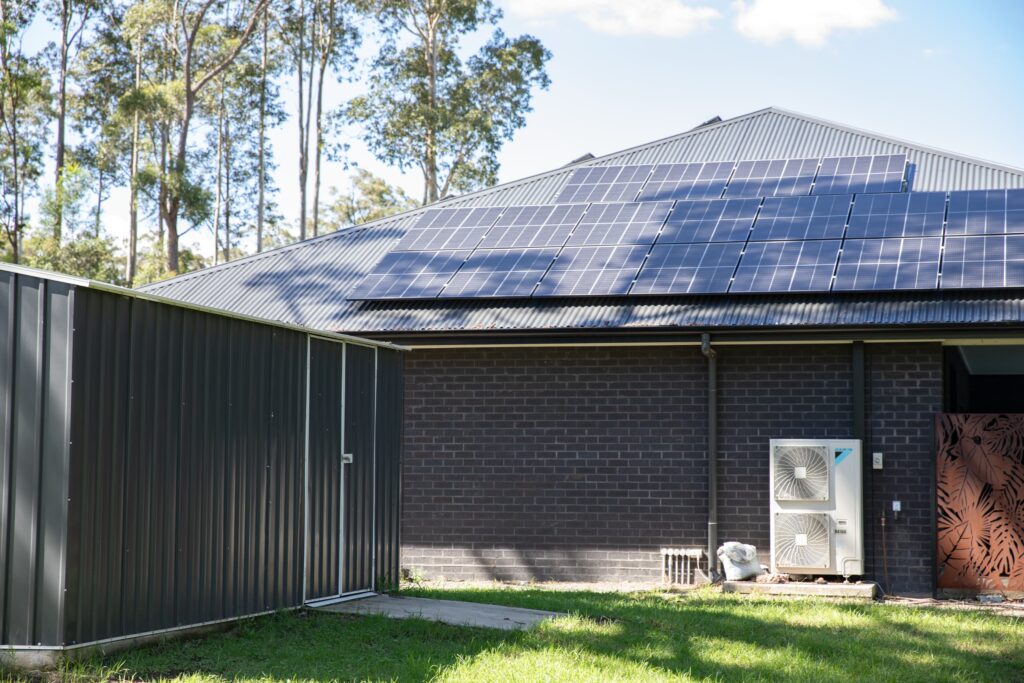
A home battery sits between your solar system and your switchboard. When your panels generate more than the house is using, the surplus charges the battery instead of flowing out to the grid. When generation drops below what you are using, usually late afternoon, the battery discharges to cover the difference.
The order of priority is worth understanding, because it is what determines whether a battery pays. Your household load is served first, from solar. Surplus goes to the battery second. Only once the battery is full does anything export to the grid. In the evening it runs in reverse: battery first, grid only when the battery is spent.
Sizing is the part that most affects the return. A battery sized to your evening consumption gets used fully most days. One sized to a round number, or to the largest unit a salesperson can fit, spends much of the year half empty and takes far longer to pay for itself. This is why we work from your actual consumption pattern rather than a quarterly bill total.
Backup is a separate capability from storage. A battery that stores power does not automatically keep your house running in a blackout; that needs a backup gateway, correctly wired at the switchboard. Full home backup is standard on the systems we recommend, but it is worth asking any installer whether their quote includes it.
Two ways to make it work harder
A battery sized for your worst evening sits partly unused most days. These are the two things that put that spare capacity to work.

Frequently asked questions
How much does a battery cost?
It depends on capacity and whether you already have solar. Federal Cheaper Home Batteries funding and state schemes reduce the figure considerably, and we apply everything you qualify for at quote stage rather than as a surprise later.
Can I add a battery to an existing solar system?
Usually yes. Some older inverters need replacing or pairing with a hybrid unit. We check what you have before quoting, and we will tell you if it is not worth doing.
Will a battery keep my whole house running in a blackout?
Only if it is fitted with a backup gateway, wired into your switchboard. A battery on its own shuts down with the rest of the system for safety, even when full. Whole-home backup is available on the systems we install and we will quote it as part of the design, but it is a separate component rather than something every battery includes.
What warranty do batteries carry?
What is the Solar Sharer Offer?
A regulated electricity plan available since July 2026. Retailers in NSW, South East Queensland and South Australia must offer at least one plan including three hours of free electricity daily, capped at 24 kWh. It runs 11am to 2pm in NSW and South East Queensland, and midday to 3pm in South Australia. You need a smart meter and you have to opt in. It does not apply in the ACT or Tasmania.
Can I charge a battery during the free window?
Yes. That is what makes the offer genuinely valuable for a household that is out during the day: the battery fills at no usage cost and runs your house through the evening peak, whatever the weather did.
Do I need solar to get the Solar Sharer Offer?
No, it is a retail electricity plan and does not require rooftop solar. A battery is what lets most households actually use the free window rather than being limited to whatever they can run mid-weekday.
What is a VPP and do I have to join?
A virtual power plant pools stored energy from many homes and discharges it when the grid is under strain. You get paid for participating. It is entirely optional and you are not locked into a single retailer.
What our customers say


Ready to see what solar and battery could do for your place?
Tell us a little about your home and a local consultant will call you back. No obligation, no pressure.
Prefer to talk? Call 02 8311 7338.