Sigenergy Battery Explained: How SigenStor Grows With Your Home
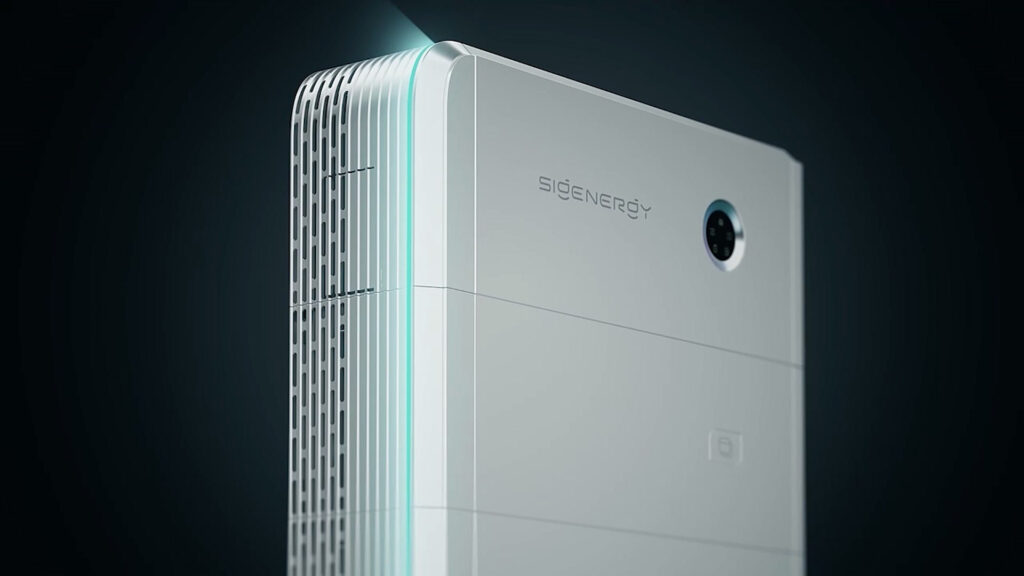
Most home batteries are bought as a single unit, sized for the household on the day it goes in. The Sigenergy battery, sold as SigenStor, is built differently: stackable modules on one controller, so a home can start with one and add more as its needs change.
That raises fair questions about blackout backup and how the federal rebate treats a battery you plan to grow, with the rebate rate scheduled to drop on 1 January 2027. This guide covers how the modules work, backup, what the rebate is worth as at October 2026, and who SigenStor suits.
The Short Answer: What Is the Sigenergy Battery?
SigenStor is a modular home battery system. Each battery module (the BAT 10.0) holds 9.04 kWh in total and 8.76 kWh of usable energy, according to Sigenergy’s specifications. Between one and six modules stack on a single Energy Controller, which acts as both the inverter and the brains of the system. It comes with a 10 year warranty, and Clean Power Australia manages any claims through its 100% Australian based support team.
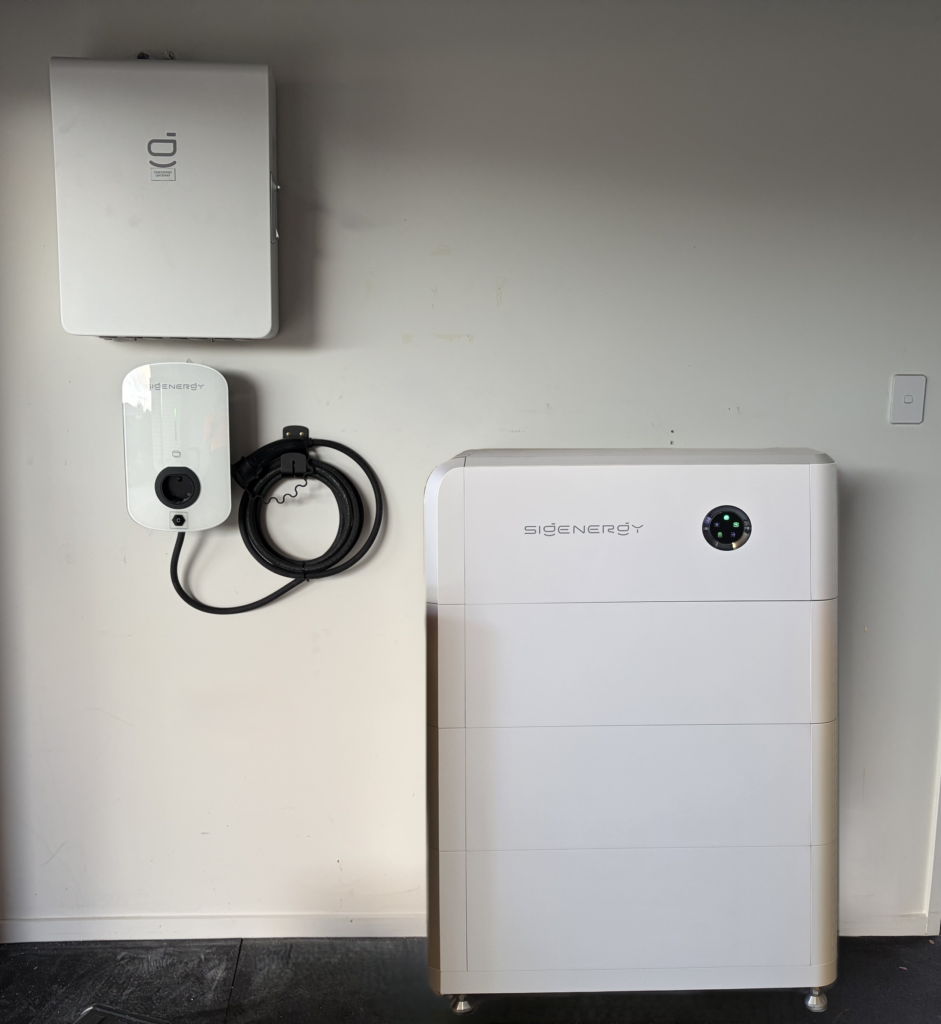
Sigenergy describes SigenStor as a five-in-one system: solar inverter, battery power conversion, battery pack, energy management and an optional EV DC charger. That means fewer boxes on the wall and one app. Full specifications are on our Sigenergy SigenStor battery page.
| Specification | SigenStor BAT 10.0 module |
|---|---|
| Usable energy | 8.76 kWh per module |
| Total energy | 9.04 kWh per module |
| Modules per Energy Controller | 1 to 6 |
| Chemistry | Lithium iron phosphate (LFP) |
| Enclosure rating | IP66, indoor or outdoor |
| Warranty | 10 years |
What Does “Modular” Mean in Practice?
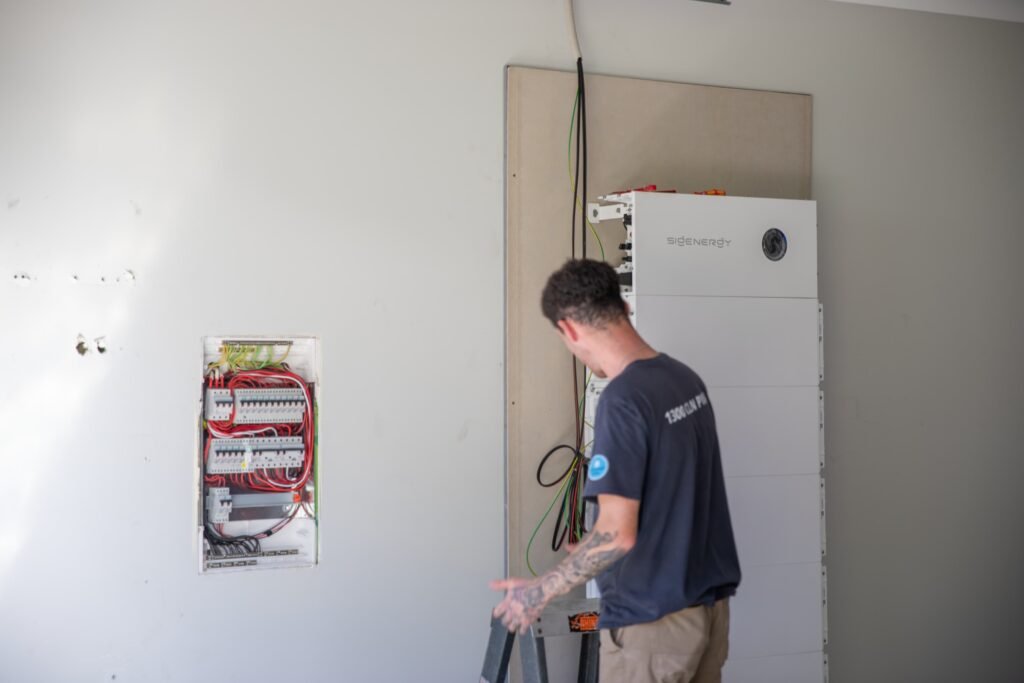
A modular battery is a stack of identical modules sharing one inverter. With SigenStor, the Energy Controller sits on top of the stack, connects to your solar and switchboard, and manages every module beneath it.
- Start at the size you need now. One module gives 8.76 kWh usable, two give 17.52 kWh and three give 26.28 kWh.
- Add modules later without replacing the controller. A new module stacks onto the existing Energy Controller, up to six in total.
- Old and new modules can work together. Sigenergy fits a DC optimiser in each module, which it says allows modules of different ages and states of health to run side by side.
- The controller sets the ceiling. Energy Controllers come in single-phase versions up to 12 kW and three-phase versions up to 30 kW, which limits how much solar and load the system can handle.
That last point is easy to miss. If an EV, heat pump or pool is likely in the next few years, size the controller for where your household is heading. Adding a module is simple. Swapping an undersized controller is not.
Does a Sigenergy Battery Work in a Blackout?
Only with the right hardware. A SigenStor system on its own shuts down when the grid goes down, a safety measure so it cannot push power onto the network during an outage. Settle this before you sign, not during the first storm of the season.
Backup needs the Sigen Energy Gateway, a separate unit that isolates your home from the grid in an outage and runs it from the battery and solar. In Sigenergy’s Australian product brochure, the Gateway is rated at 0 ms of load-side disruption when paired with its Energy Controller and batteries, so connected appliances should carry on without a noticeable break.
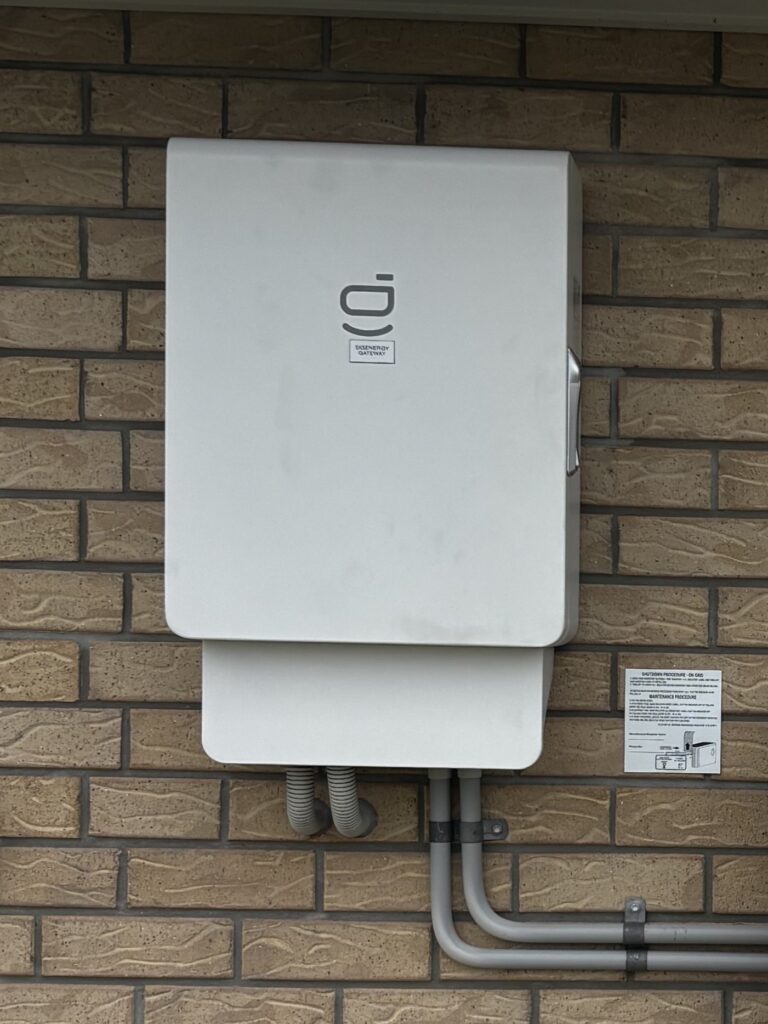
- Whole-home or nominated circuits. The Gateway can back up the whole house or a prioritised set of circuits, such as the fridge, lights and internet.
- Generator input. It supports a generator connection with two-wire start for longer outages.
- Design matters. Whole-home backup depends on the Gateway and controller ratings, battery size and what you run.
For why most solar switches off in an outage, read what happens to your solar when the power goes out.
One module or three? Whole-home backup or just the essentials? Our consultants size SigenStor to your evening usage and the circuits you cannot do without. See how we design Sigenergy systems
EV Charging and VPPs: What Else Can SigenStor Do?
EV charging. SigenStor can take an optional EV DC charging module that slots into the stack, drawing on solar and battery power directly. Sigenergy lists 12.5 kW and 25 kW versions, with the 25 kW module bidirectional. Vehicle-to-home and vehicle-to-grid depend on the car and on Australian standards, which Sigenergy says it will add by software update once published.
Virtual power plants. A virtual power plant (VPP) is a network of home batteries that a retailer or aggregator can call on at peak times, usually crediting the owner in return. SigenStor is VPP-capable, and Sigenergy lists AI-assisted VPP scheduling. Joining is optional, and payments vary by program and retailer. Our guide to how a virtual power plant works explains the trade-offs.
How the Federal Battery Rebate Applies to SigenStor
The Australian Government’s Cheaper Home Batteries Program provides an upfront discount through small-scale technology certificates (STCs). According to the Clean Energy Regulator, STCs are calculated on usable capacity, at a factor of 6.8 for batteries installed from May to December 2026, falling to 5.7 from 1 January 2027 and 5.2 from 1 July 2027.
The rate tapers as batteries get bigger: the first 14 kWh earns the full rate, 14 to 28 kWh earns 60%, 28 to 50 kWh earns 15%, and nothing above 50 kWh usable counts. To qualify, a battery must be 5 to 100 kWh nominal capacity, VPP-capable and installed by an SAA accredited installer with battery endorsement, with one battery claim per premises.
| Modules | Usable capacity | Up to (installed in 2026) | Up to (from 1 Jan 2027) |
|---|---|---|---|
| 1 | 8.76 kWh | ~$2,350 | ~$1,950 |
| 2 | 17.52 kWh | ~$4,350 | ~$3,650 |
| 3 | 26.28 kWh | ~$5,800 | ~$4,850 |
These are upper-bound estimates at the $40 STC clearing house price, rounded to the nearest $50, as at October 2026 and subject to eligibility. Most certificates trade a little below $40 on the open market, so the discount on your quote will usually land slightly under these figures.
The second module adds about $2,000 because part of it crosses the 14 kWh line. The third adds about $1,450 because it sits entirely in the 60% band. A fourth would reach the 15% band and add much less.
Size it right the first time. The certificates are claimed once, at the original installation. The CER allows one battery claim per premises, and extra capacity added to an existing battery only qualifies if that battery has not already claimed STCs. So if you install one module with the rebate now and add two more later, those extra modules will not attract a second claim. The rebate maths favours installing the capacity you expect to need up front, especially with the battery rebate step-down due on 1 January 2027. Our federal battery rebate guide covers eligibility in full.
Who Suits SigenStor, and Who Might Prefer Hinen?
SigenStor tends to suit:
- Households planning to grow, with an EV or heat pump on the horizon.
- Homes that want blackout backup designed in from day one through the Energy Gateway.
- New or replacement solar systems, where the integrated inverter does away with a separate box.
- Larger and three-phase homes, which can use three-phase controllers up to 30 kW.
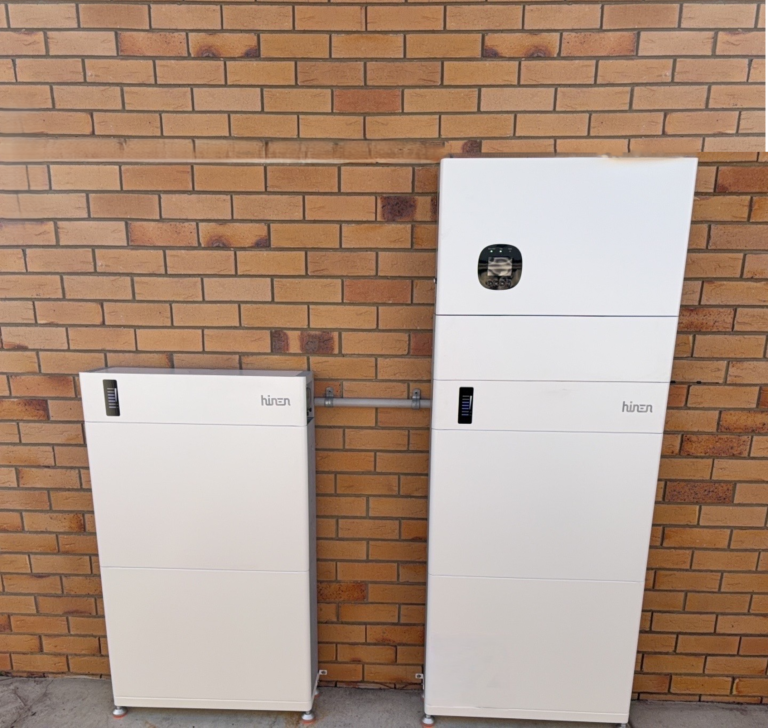
The Hinen B14400 battery may be the better fit if you want a single, fixed-size battery at a lower upfront cost. It offers 13.68 kWh usable (14.4 kWh rated), which sits entirely within the full-rate 14 kWh band of the rebate, and a 12 year warranty. It pairs with a separate inverter and does not offer SigenStor’s built-in EV charging option.
The right choice comes down to your evening usage, your switchboard and your plans. Clean Power Australia has completed more than 10,000 installs across NSW, QLD, ACT and SA since 2017, using local SAA accredited installers, and can quote both side by side. You can compare our home battery range before you talk to anyone.
Common Questions
Can I add SigenStor modules years later?
Yes. One Energy Controller supports up to six modules, and Sigenergy says its per-module optimiser lets new modules work alongside older ones. If your original installation claimed the federal rebate, the new modules will not attract a second claim.
How many SigenStor modules do I need?
It depends on your evening and overnight usage, and whether you want backup or EV charging. Many homes land on two or three modules (17.52 to 26.28 kWh usable), sized from actual bills rather than a round number.
Do I have to join a VPP to get the rebate?
No. The battery must be capable of joining a virtual power plant to qualify for STCs, but signing up to one is your choice. VPP payments and terms vary by program and retailer.
If a Sigenergy battery is on your shortlist, the next step is a design based on your own bills, with the rebate shown on the quote before the rate drops in January.
Sources