AI Data Centres Are Coming. What It Means for Your Power Bill
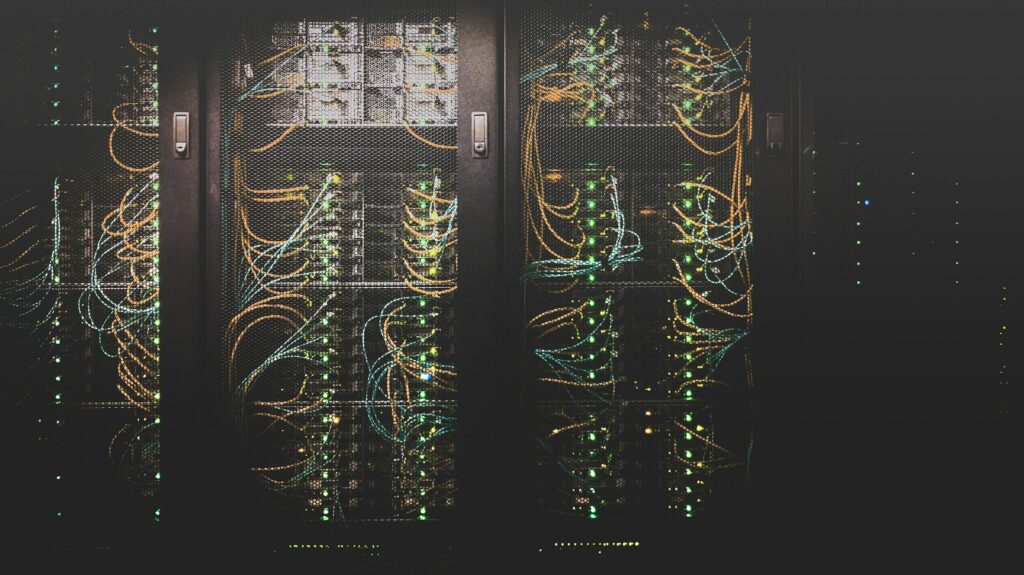
Artificial intelligence runs on data centres, and data centres run on electricity. In its 2026 Electricity Statement of Opportunities, the Australian Energy Market Operator (AEMO) forecast that data centre electricity use on the east coast grid will grow from about 5 terawatt hours in 2025-26 to 34 terawatt hours by 2035-36. That takes data centres from roughly 3 per cent of grid supply to around 13 per cent, close to what every home in NSW and Victoria uses today.
This post explains what that means for your power bill, which parts of the bill feel it first, and why the households least exposed will be the ones making and storing their own electricity.
The Short Answer: Will AI Data Centres Push Up Power Bills?
The pressure is upward, and it builds over the next decade rather than arriving on your next bill. Regulated prices actually eased this year: the AER’s 2026-27 Default Market Offer fell 3.4 to 5.0 per cent for NSW households and 7.2 per cent in South East Queensland, while South Australia rose 1.4 per cent. The main reason given was lower wholesale electricity costs.
That wholesale component is exactly where new data centre demand lands. Modelling by Baringa for the Clean Energy Finance Corporation, reported by the ABC, found NSW wholesale prices could rise 26 per cent by 2035 if new renewable supply does not keep pace, or about 7 per cent if it does. Either way, the direction is up. This year’s relief is a dip, not a new normal.
Why AI Needs So Much Electricity
Every AI chat, image and search runs on racks of servers that draw power and need constant cooling. Three details from AEMO’s forecast explain why this matters for households.
- The pipeline is enormous. Networks reported 225 data centre projects seeking connection in 2026, with 67 gigawatts of proposed capacity, up from 38 gigawatts a year earlier. AEMO expects many to drop out, and still forecasts a seven-fold rise in use.
- They never switch off. AEMO describes mature data centres as running constantly, with only small changes between working hours and overnight. That includes the evening peak, when rooftop solar has stopped and the grid is at its most expensive.
- They are clustering close to home. AEMO expects data centre development to be most concentrated in NSW and Victoria.
The federal government has taken notice. The Prime Minister has said data centres will need to bring their own generation, and rule changes have been proposed so large users carry more of the network costs they create. How strictly those rules are written will decide how much lands on everyone else.
Where the Cost Shows Up on Your Bill
A power bill is several costs stacked together. Data centres affect each one differently.
| Part of your bill | What data centres do to it | Likely direction |
|---|---|---|
| Wholesale energy (about 40 per cent) | More demand competing for the same supply, around the clock | Up |
| Transmission | New lines needed to carry power from regional wind and solar into cities | Up, unless data centres pay |
| Local network (poles and wires) | Fixed costs spread over more usage | Could ease |
| Your own usage pattern | Unchanged by data centres | In your control |
Energy economist Bruce Mountain told the ABC that transmission into Australia’s cities is already close to full, and that unless data centres pay for the expansion they will push prices up. Network businesses argue the opposite for local poles and wires, because a fixed amount of revenue spread over more electricity lowers the cost per unit. Both can be true at once, which is why the honest forecast is “higher, by an amount still being decided”.
Want to know how exposed your household is? We look at when you actually use power, not just how much, then size solar and storage to cover the expensive hours. See how we design home battery systems
The Evening Squeeze
Here is the part that matters most for a household with solar. At midday, rooftop panels flood the grid and electricity is cheap. That is why IPART’s 2026-27 feed-in tariff benchmark for NSW fell to 3.4 to 6.5 cents per kilowatt hour, down from 4.8 to 7.3 cents the year before.
After sunset the picture flips. Solar drops away, households switch on air conditioning, cooking and TVs, and demand peaks. Data centres add a steady load on top of that window every single night. So the gap keeps widening: what you are paid for a kilowatt hour at noon keeps falling, while what you pay for one at 7pm faces new competition.
What You Can Actually Control
You cannot decide how many data centres connect or how the rules are written. You can decide how much of your electricity comes from your own roof, and when you use it.
| What you do with a kWh of solar | What it is worth | Trend |
|---|---|---|
| Export it to the grid | Your retailer’s feed-in rate | Falling |
| Use it as it is generated | The retail rate you avoid | Under upward pressure |
| Store it and use it at night | The evening rate you avoid | Most exposed to rises |
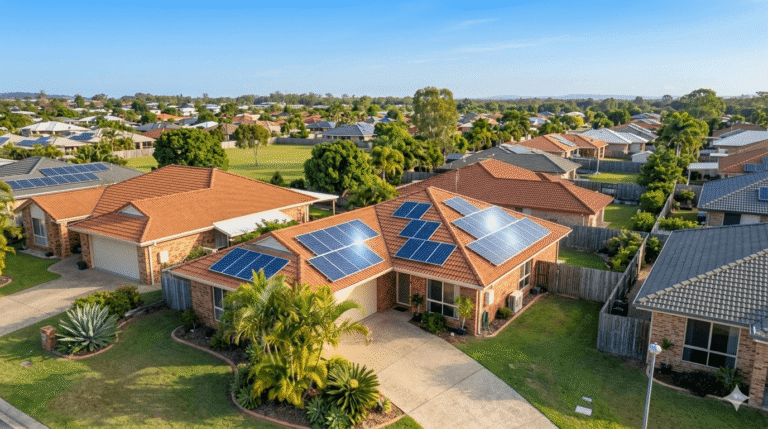
That table is the case for solar with storage in three rows. Rooftop solar covers the daytime. A battery moves the surplus into the evening, which is the window data centres compete for. Some households go further and join a virtual power plant, a program that pays for stored power during peak events. Payments vary by program and retailer, so read the terms first.
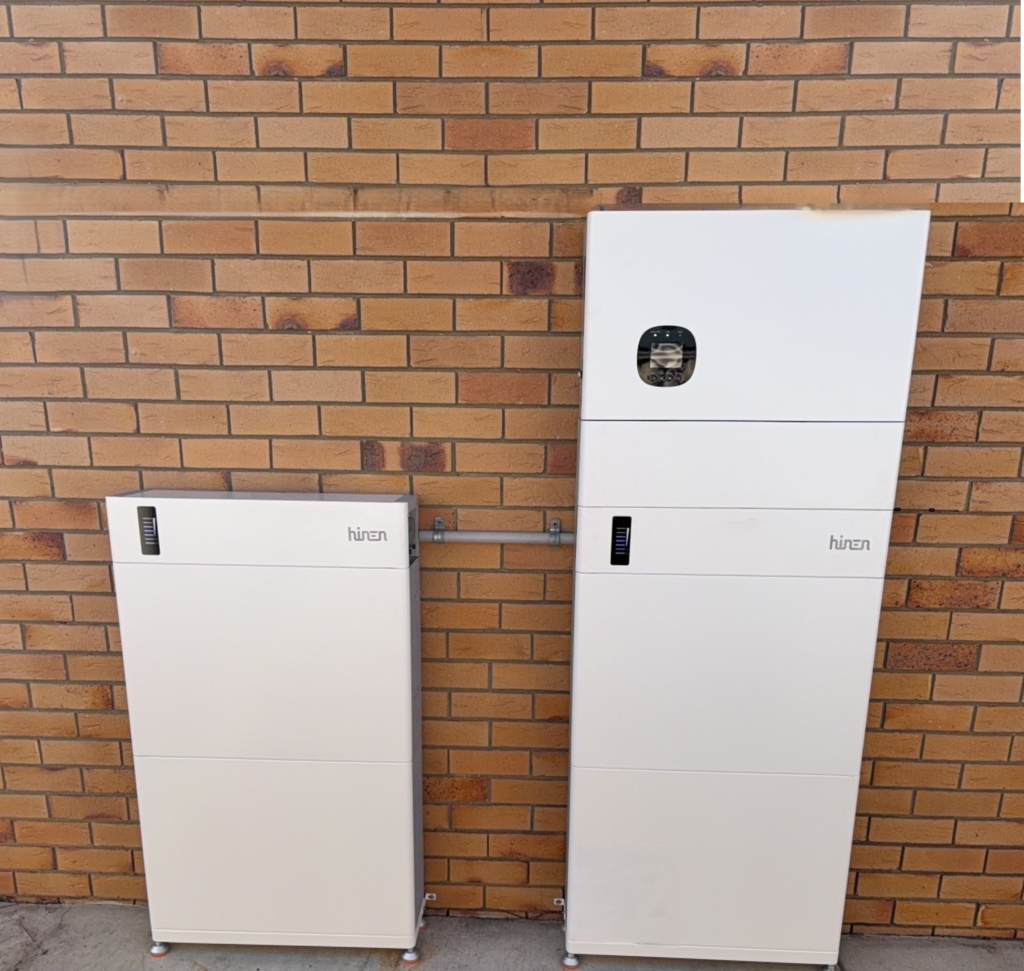
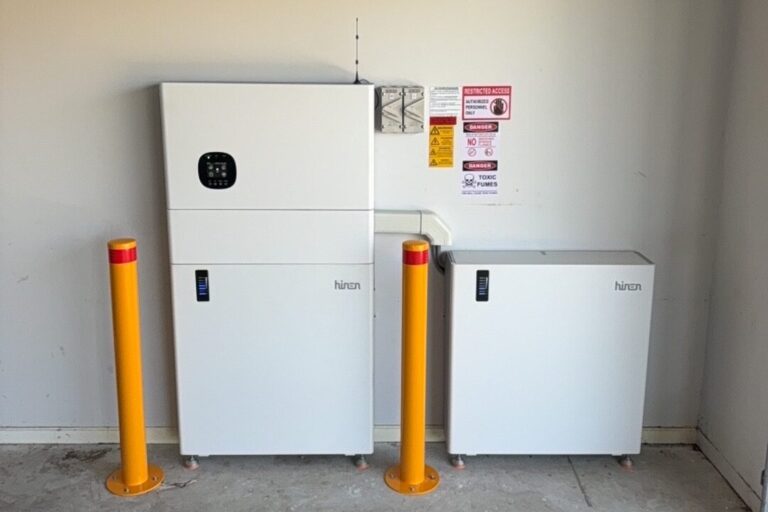
Clean Power Australia has completed more than 10,000 installs across NSW, QLD, ACT and SA since 2017, and the question we are asked most often is simple: how big does my battery need to be? The answer comes from your evening usage, not a brochure. For many homes a single unit like the Hinen battery with its 12 year warranty covers the evening. Others need a larger or modular setup. If choosing the right home battery is where you are stuck, that is what a consultation is for.
A Short Checklist Before Summer
- Check your feed-in rate on your latest bill. Plenty of households are still on a plan they chose years ago.
- Find your evening usage. Most retailer apps show usage by time of day. The kilowatt hours after sunset are the ones a battery covers.
- Move what you can into daylight. Dishwasher, washing machine, pool pump and hot water on timers cost nothing to change.
- Look at your roof. Old, undersized or shaded panels may need upgrading before storage makes sense.
- Price storage while the rebate is higher. The federal battery rebate steps down on 1 January 2027, and it is set by your install date. We explain the numbers in what the January rebate change costs you.
Common Questions
Are data centres making my bill go up right now?
Not directly this quarter. Regulated prices fell for most NSW and South East Queensland households on 1 July 2026. The pressure from data centres builds as they connect and ramp up over the next decade, mainly through wholesale and transmission costs.
Will the government stop data centres raising prices?
It is trying. The Prime Minister has said data centres will need to bring their own generation, and rule changes have been proposed to make large users pay more of the network costs they cause. The detail is still being worked out, so the final impact on households is not yet known.
Does AEMO expect blackouts because of AI?
No. The 2026 outlook forecasts no reliability gaps before 2030, provided planned investment in generation, storage and transmission goes ahead. The concern is cost and timing, not the lights going out.
Is a battery worth it if I already have solar?
It depends on how much power you use after dark. A household that runs air conditioning, cooking and hot water in the evening usually gets more from storage than one that uses most of its solar during the day. Your time-of-day usage is the best guide.
If you want to see what your own bill and roof say about solar and storage, a local consultant can run the numbers with you.
Check what your home could save
Sources
- AEMO, 2026 Electricity Statement of Opportunities media release, August 2026
- AEMO, 2026 ESOO data centre forecasting overview
- AER, Final Default Market Offer 2026-27, May 2026
- ABC News, Energy prices are falling but the rise of data centres could push them back up, July 2026
- ABC News, Data centres to consume nearly as much power as every home in NSW and Victoria by 2036, August 2026
- IPART, All-day solar feed-in tariff benchmark 2026-27 fact sheet