Is a Solar Battery Worth It? What New AEMO Data Shows
The Australian Energy Market Operator (AEMO) has just put a number on what a home battery does to your evenings. In its Quarterly Energy Dynamics report for July to September 2026, AEMO found that homes with rooftop solar and a battery drew around 74% less power from the grid between 4pm and 9pm than homes with solar alone.
If you have been asking yourself “is a solar battery worth it?”, this is the most useful real-world data yet. Below we explain what AEMO measured, why the evening is where a battery earns its keep, and how to tell whether the same result would work at your place.
Is a Solar Battery Worth It? The Short Answer
A battery is worth it because it moves cheap midday power into the evening. It charges in the middle of the day, from your own solar or from free or cheap grid power such as the Solar Sharer Offer window, and stores that power for the evening, when your household actually needs it and electricity costs the most.
Without a battery, most solar homes export their surplus at midday for a small feed-in credit, then buy power back after sunset at the highest rate of the day. A home battery closes that gap. AEMO’s new figures show it happening across hundreds of thousands of homes, not just in a brochure.
It pays off best when these conditions are true:
- You use a fair bit of power after dark: cooking, lights, TV, air conditioning, a pool pump or an EV.
- Your feed-in tariff is low, so exporting midday solar earns you little.
- You are on, or can switch to, a time-of-use plan or a Solar Sharer offer, so stored power replaces your most expensive evening kilowatt hours.
- The battery is sized to your evening use, not a round number.
What Did AEMO Actually Find?
AEMO compared the meter data of about 2.4 million detached homes with rooftop solar across the National Electricity Market. Around 1.9 million had solar only and around 0.5 million had solar plus a battery. During the evening peak (4pm to 9pm), the battery homes stayed net exporters for longer and imported far less.
| Measure (July to September 2026) | AEMO figure |
|---|---|
| Evening peak grid use, battery homes vs solar-only homes | 74% lower |
| Average evening import saved per battery home | 0.7 kW lower |
| Homes in the sample | About 2.4 million |
| Batteries installed under the federal program, end of September | 483,835 |
| Battery capacity under the program: NSW, QLD, SA | 5,885 MWh, 3,166 MWh, 1,568 MWh |
To put the 0.7 kW figure in household terms: spread across the five-hour peak, it works out to roughly 3.5 kWh less grid power per home, per evening, on average. That is our arithmetic from AEMO’s average, not a promise for any one home. Bigger batteries and heavier evening users will see more, smaller systems less.
One fair caveat. AEMO compared two groups of homes rather than the same homes before and after a battery, and homes that buy batteries may use power differently to begin with. Even so, a three-quarter gap across half a million homes is hard to explain any other way.
Why the Evening Is Where a Battery Earns Its Keep
The government’s Energy Made Easy service puts it plainly: peak rates usually apply in the evenings, and peak is when electricity costs the most. Meanwhile, feed-in tariffs are typically a lot lower than the price you pay to buy from the grid, according to energy.gov.au. Every kilowatt hour you store at midday and use at 7pm is one you do not buy at the top rate.
Since 1 July 2026 there is a second way to fill a battery. The Solar Sharer Offer gives households on an eligible plan in NSW, South East Queensland and South Australia up to 24 kWh of free electricity in a three-hour midday window each day: 11am to 2pm in NSW and SE Queensland, 12pm to 3pm in South Australia. You need a smart meter and a retailer offer, but on a cloudy day your battery can still top up for free. We cover the details in our Solar Sharer Offer guide.
Here is what a typical spring weekday looks like with a battery:
- Morning: your solar starts covering the house as the sun comes up.
- Midday: surplus solar, plus free Solar Sharer power if you are on that plan, fills the battery.
- 4pm to 9pm: the battery runs dinner, lights, TV and the air conditioner, right through the most expensive hours.
- Overnight: whatever is left covers the fridge and standby loads until the sun is back.
Want to know how much of your evening a battery could cover? We size every system to your actual evening usage. See how we design solar batteries
What It Means for the Grid and Your Power Bill
Batteries are now shaping prices for everyone. AEMO reported that wholesale spot prices averaged $63/MWh across the market in the September quarter, down 27% on a year earlier and the lowest September quarter since 2021. Grid-scale batteries supplied 8.0% of evening peak generation, more than gas (5.1%) for the first time in any quarter.
Wholesale prices are only one part of a retail bill, so lower wholesale prices do not automatically mean a lower bill for you. What you control is how much you buy in the evening. That is the part a home battery changes directly, and it is why the AEMO result matters more to your household than the market headline.
How to Get the Same Result at Your Place
The homes in AEMO’s data cut their evening grid use because their batteries were full at 4pm and large enough to carry the house through the peak. Getting that right comes down to three things.
- Size to your evenings. Look at your usage after 4pm, then size the battery to cover it with some headroom for winter. Our battery size guide walks through it.
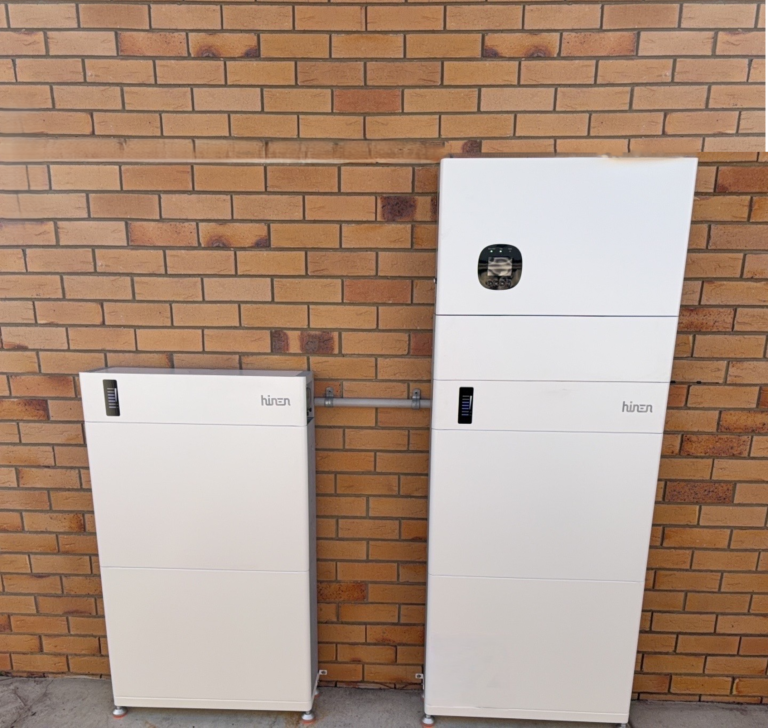
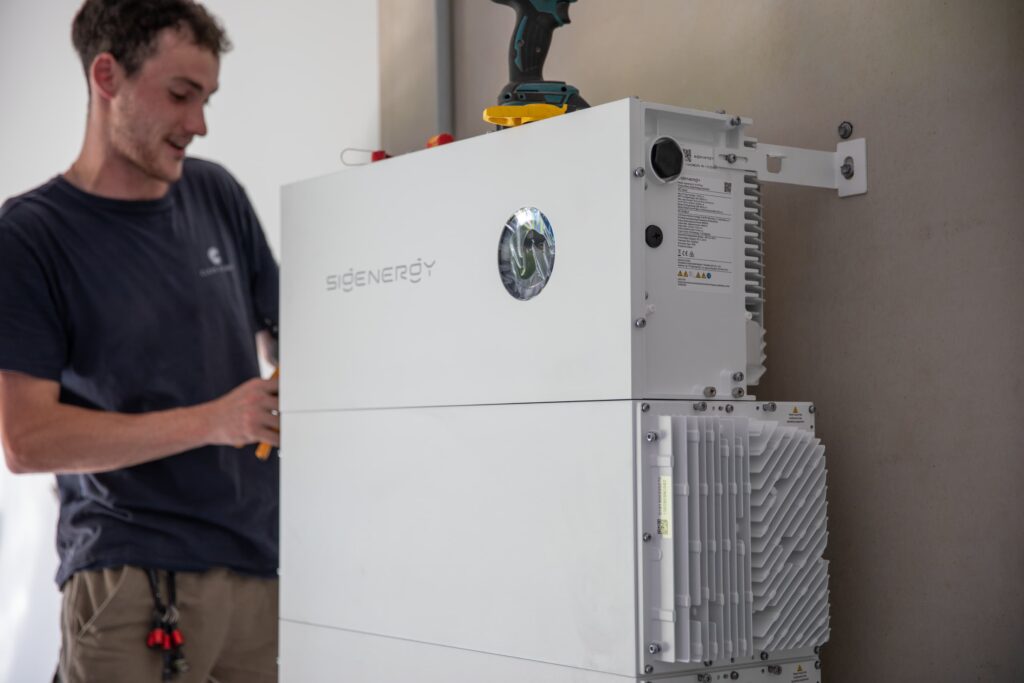
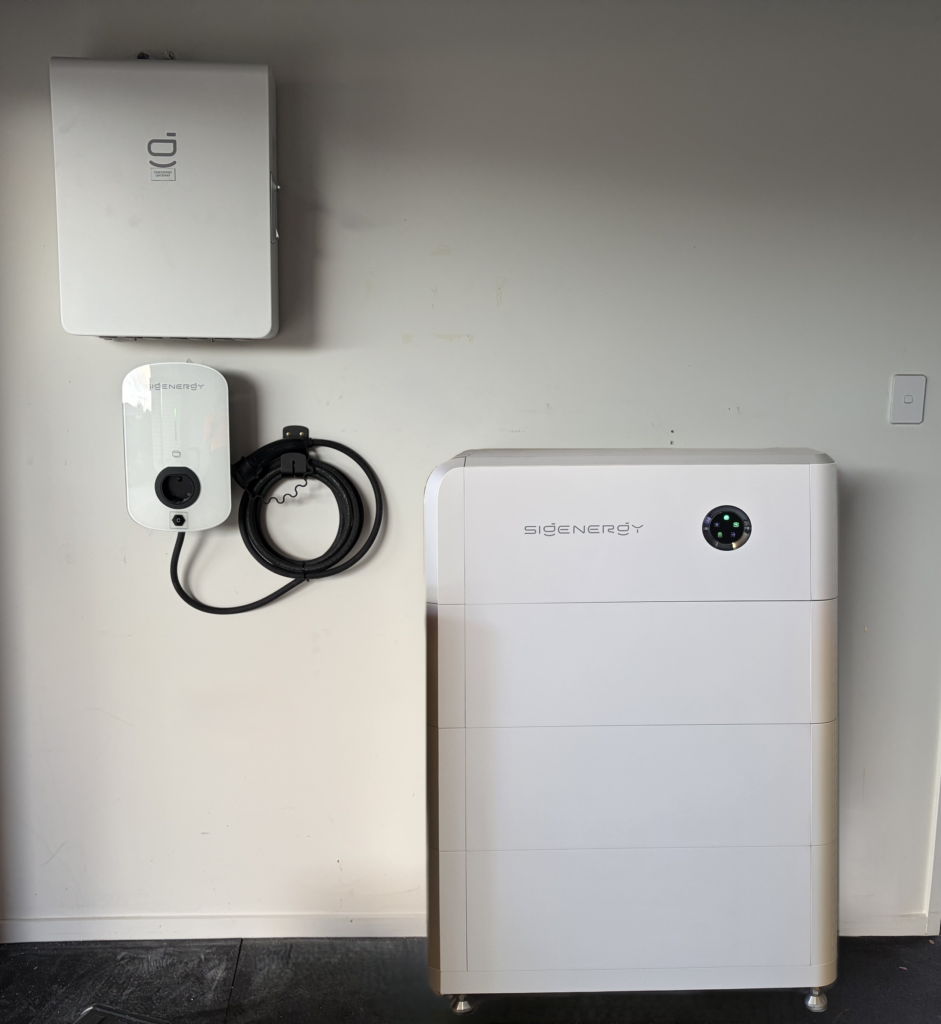
- Pick a battery that fits the job. The Sigenergy SigenStor stacks in 8.76 kWh modules (one to six per controller) and comes with a 10 year warranty. The Hinen B14400 gives 13.68 kWh usable in one unit with a 12 year warranty.
- Decide on backup up front. A battery does not keep the lights on in a blackout by itself. Backup needs a backup-capable setup, such as the Sigen Energy Gateway, and what it covers depends on the system design.
Timing matters too. The federal Cheaper Home Batteries Program discount is calculated on usable capacity, and the Clean Energy Regulator’s schedule drops the factor from 6.8 to 5.7 on 1 January 2027 (as at October 2026, subject to eligibility). Clean Power Australia has installed more than 5,000 batteries across NSW, QLD, ACT and SA, and our consultants will model your evening usage before recommending a size.
Common Questions
Does a 74% cut in evening grid use mean a 74% lower bill?
No. The figure is about grid power drawn between 4pm and 9pm, not your whole bill. Daily supply charges, daytime use and your retail plan all affect the total, so your result depends on your usage and tariff.
Can I charge my battery from the grid for free?
If you are in NSW, SE Queensland or South Australia, have a smart meter and choose a retailer’s Solar Sharer Offer, the first 24 kWh you use in the midday window each day is free. A battery can charge during that window like any other appliance.
Is a battery still worth it if I already export lots of solar?
That is often the best case for one. A big midday surplus means the battery fills easily, and every kilowatt hour you use at night instead of exporting is worth more to you than the feed-in credit.
Will a battery keep my power on during a blackout?
Only if the system is designed for backup, with a gateway or backup circuit. Some setups back up selected circuits, others the whole home. Ask for backup to be included in the design if it matters to you.
If your evenings are where your power bill hurts, a local consultant can show you how much of them a battery would cover.
Check what your home could save
Sources