Your Battery Rebate Drops on 1 January 2027. Here’s What It Costs
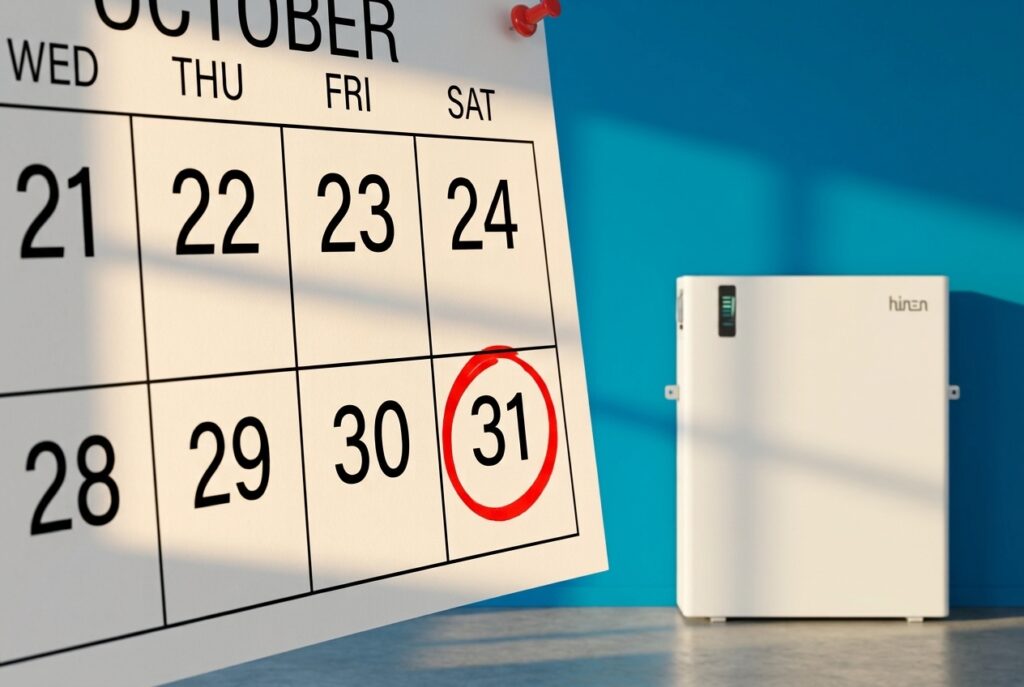
On 1 January 2027 the federal battery rebate gets smaller. The rate used to calculate your discount drops from 6.8 to 5.7 certificates per kilowatt hour of usable capacity, a cut of about 16 per cent, and it is already locked into the government’s published schedule.
This post shows what the rebate is worth today, what the January change does to that number on a typical home battery, and why October is the practical deadline. All figures are as at September 2026 and subject to eligibility.
The Short Answer: How Much Smaller Does the Battery Rebate Get?
The federal discount comes from small-scale technology certificates (STCs). The number of certificates a battery earns is set by a factor that now steps down every six months. For installations from May to December 2026 the factor is 6.8. From 1 January 2027 it falls to 5.7, then to 5.2 from 1 July 2027, according to the Cheaper Home Batteries Program schedule.
On a typical home battery that is roughly $400 to $950 less off your invoice, depending on size. And the key detail most people miss: the rate is set by the date your battery is installed, not the date you sign.
How the Federal Battery Rebate Works
The Cheaper Home Batteries Program is funded by the federal government and administered by the Clean Energy Regulator. You do not apply for it and you never wait for a cheque. Your battery earns a set number of certificates at installation, you assign them to your installer, and the value comes off your invoice up front.
Certificates are capped at $40 each through the regulator’s clearing house, and most trade a little below that, so treat $40 as a ceiling rather than a promise. The regulator says the factor is adjusted so the discount stays at around 30 per cent of the upfront cost as battery prices change.
To qualify, a battery generally needs to be paired with a solar system (new or existing), be on the approved product list, be able to join a virtual power plant even if you never do, and be installed by an SAA accredited installer. Certificates are calculated on the first 50 kWh of usable capacity. Eligibility is confirmed at installation.
What the January Cut Costs on Real Batteries
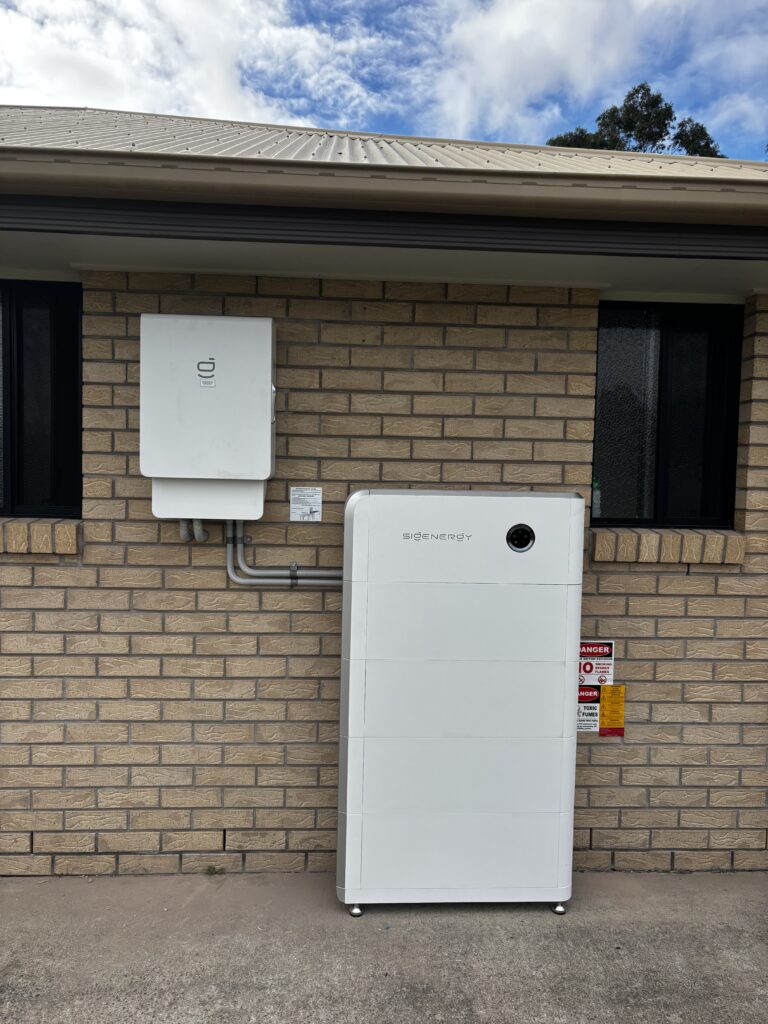
Assumptions: published usable capacity (the measure the scheme uses), certificates at the $40 ceiling, whole certificates only, rounded to the nearest $50. Most certificates trade a little under $40, so treat these as upper bounds rather than quotes.
| System | Installed by 31 Dec | Installed from 1 Jan | You lose |
|---|---|---|---|
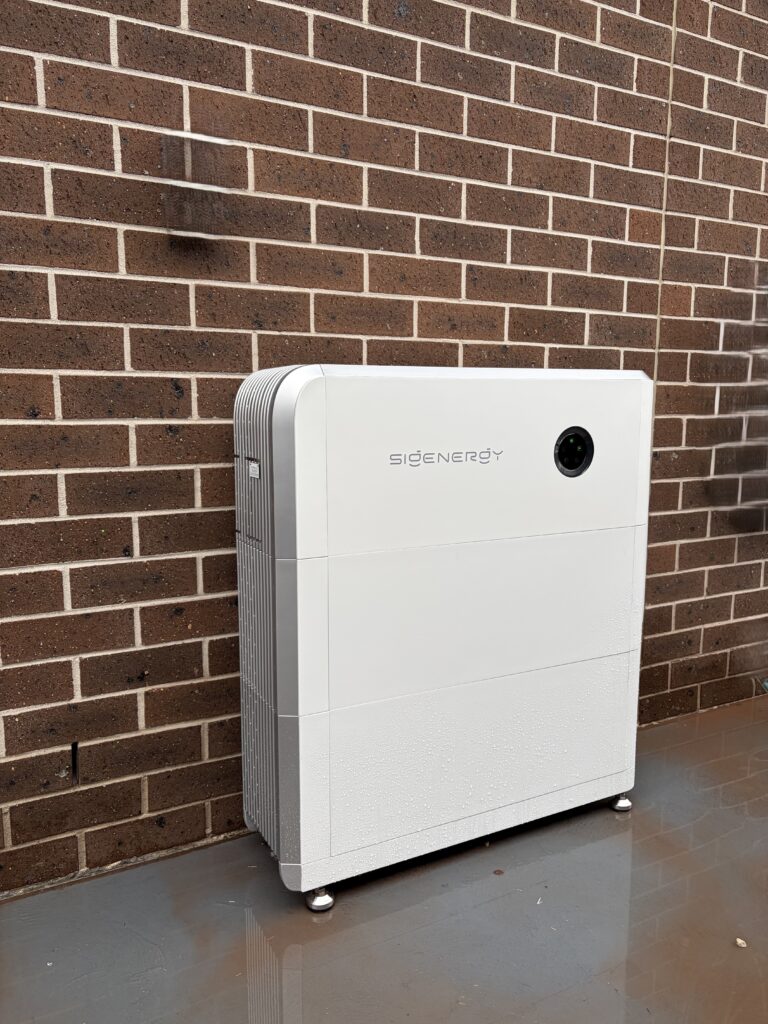
| SigenStor, one module (8.76 kWh) | $2,350 | $1,950 | $400 |
| Hinen B14400, one unit (13.68 kWh) | $3,700 | $3,100 | $600 |
| SigenStor, two modules (17.52 kWh) | $4,350 | $3,650 | $700 |
| SigenStor, three modules (26.28 kWh) | $5,800 | $4,850 | $950 |
A single Hinen B14400 is the clearest example. Its 13.68 kWh of usable capacity sits just under the 14 kWh threshold, so every kilowatt hour earns the full rate. Installing it before New Year rather than after is worth about $600.
Not sure what your battery would earn? We work the certificate value into the quote itself, so you see the discounted price at today’s rate. See how the battery rebate applies to your system
Why October Is the Real Deadline
Because the rate is locked in on installation day, signing on 30 December does not help. Between a site assessment, a grid connection application with your network, stock and the install itself, a battery job typically takes several weeks from first conversation to switch-on.
That is why October matters. Book with us in October and we can guarantee your battery is installed before 1 January, at today’s higher rate. After October, every household chasing the same deadline lands in the same queue, storm season pushes enquiries up, and the Christmas shutdown takes a week or two out of the calendar. From that point we cannot promise an install before the rate drops.
- Book in October: installation guaranteed before 1 January at the current rate, subject to eligibility and network approval.
- Book from November: no guarantee. Your install may land in January, at the lower rate.
Why Bigger Batteries Do Not Scale Evenly
Since May 2026 the rebate tapers by size. The bands apply to each slice of usable capacity in turn:
- The first 14 kWh earns 100 per cent of the factor.
- Capacity from 14 to 28 kWh earns 60 per cent.
- Capacity from 28 to 50 kWh earns 15 per cent, and nothing is claimable above 50 kWh.
That is not an argument against a bigger battery. It is an argument for sizing on your evening usage rather than rebate value, and for asking to see the certificate calculation at each size before you commit. A modular battery you can expand later keeps that option open, though certificates are only claimed at the original installation.
What Waiting Really Costs, in Two Parts
Part one is the rebate. On a single Hinen B14400 the gap between installing before and after New Year is about $600. The schedule keeps going too: 5.2 from July 2027, then lower every six months until the scheme ends in 2030. Waiting for a better rebate is waiting in the wrong direction.
Part two is the bills you keep paying. A worked example, and your numbers will differ:
- The battery shifts 10 kWh a day of solar you would otherwise export into evening use.
- You avoid 30 cents a kilowatt hour of grid power. That is deliberately conservative: the Default Market Offer for an Ausgrid household is $1,899 a year for 3,900 kWh in 2026-27, close to 49 cents a kilowatt hour once the supply charge is included.
- You give up a 5 cent feed-in payment on the solar you store, mid-range of IPART’s 2026-27 benchmark.
That is a net 25 cents on each stored kilowatt hour, about $2.50 a day, or roughly $450 over a six month delay. Add the $600 of certificate value and putting it off until next winter costs this example household a little over $1,000.
Winter days generate less, so a real year will not hold that daily figure evenly. The point is not that waiting is a disaster. It is that “I’ll look at it next year” has a number attached, and most people assume that number is zero.
So What Should You Do Now?
If a battery was already on your list for this summer, book in October. It is the only window in which we can guarantee an install before the rate drops, and the certificates are worth several hundred dollars. If you are not sure a battery suits your usage at all, a site assessment answers that too. A well-designed solar system matched to your roof matters more than any rebate.
Clean Power Australia has completed more than 10,000 installs across NSW, QLD, ACT and SA since 2017, and handles the certificate paperwork on every battery we fit. If you want the scheme rules in one place first, our guide to the Cheaper Home Batteries Program sets out eligibility in plain language, and what AI data centres mean for your power bill explains why storage is worth more each year.
Common Questions
Do I need to apply for the federal battery rebate?
No. The discount is delivered through certificates you assign to your installer, and it comes off the invoice before you pay. Your installer handles the paperwork with the Clean Energy Regulator. Eligibility is confirmed at installation and conditions apply.
If I book in November, will I still get the current rate?
Only if the battery is installed by 31 December 2026, and from November we cannot guarantee that. The rate is set by the installation date, not the contract date, so a booking that installs in January gets the lower 5.7 factor. October bookings are the ones we can guarantee.
Can I get the rebate if my solar was installed years ago?
Yes. The battery must be paired with solar, but it can be an existing system. Older systems sometimes need switchboard or inverter work first, which a site assessment will pick up.
What happens to the rebate after 2027?
The published schedule keeps stepping the factor down every January and July until the scheme ends in 2030. It is designed to shrink as battery prices fall, so there is no point in the schedule where waiting earns a bigger discount.
If you want to know what your home would earn at today’s rate, and what install dates are still open, the quickest way is a short conversation with our team.
Sources
- DCCEEW, Cheaper Home Batteries Program, 2026
- Clean Energy Regulator, Solar batteries, 2026
- Clean Energy Regulator, Calculate small-scale technology certificate entitlements, 2026
- AER, Default market offer 2026-27 final determination, May 2026
- IPART, All-day solar feed-in tariff benchmark 2026-27 fact sheet